
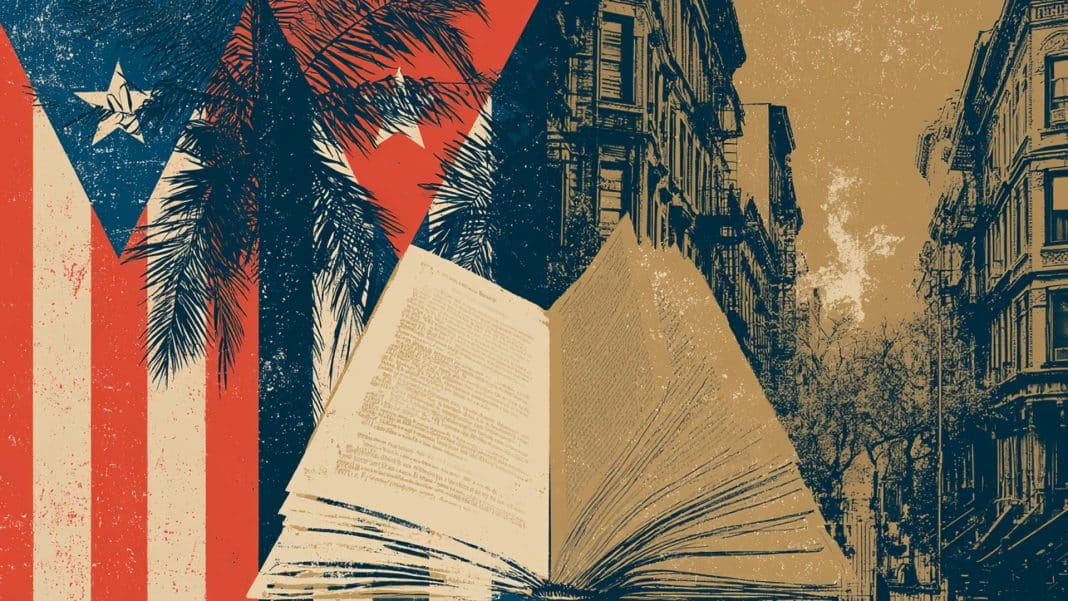
The short version: Arturo Schomburg was a Black Puerto Rican collector who, after a teacher told him Black people had no history, spent his life gathering books and documents of the African diaspora. His collection became the Schomburg Center for Research in Black Culture in Harlem, now holding more than 10 million items.
The story goes that when Arturo Schomburg was a schoolboy in Puerto Rico, a teacher told him that Black people had no history — no heroes, no accomplishments, nothing worth recording. He never forgot it. He spent the rest of his life proving her wrong, one book, one manuscript, one rescued document at a time. By the end he had assembled one of the most important collections of African diaspora material in the world. It still anchors a corner of Harlem today, and it carries his name.
Most people who walk past the Schomburg Center for Research in Black Culture have no idea the man behind it was a Black Puerto Rican who arrived in New York at seventeen and never finished a formal degree.
Who Was Arturo Schomburg?
Arturo Alfonso Schomburg was born in Puerto Rico in 1874. His mother was an Afro-Caribbean woman from the Danish West Indies; his father was a Puerto Rican merchant of German descent. From the start, Schomburg lived at the intersection that would define his life and his erasure — he was Black and Latino, Caribbean and diasporic, and the world kept insisting he had to be only one thing.
In 1891, at seventeen, he moved to New York City, settling among the community of Puerto Rican and Cuban exiles in Manhattan. He worked as a clerk and messenger at law firms and trust companies, eventually becoming supervisor of the Caribbean and Latin American mail section at Bankers Trust Company — never wealthy, never academic, always collecting.
The revolutionary years
Before he was famous as an archivist, Schomburg was a political organizer. He threw himself into the Cuban and Puerto Rican independence movements, co-founding a club called Las Dos Antillas (“The Two Antilles”) in 1892 to support the islands’ liberation from Spain. He moved easily between the Spanish-speaking world of the Caribbean exiles and the English-speaking world of Black Harlem — a bridge figure decades before anyone had the vocabulary for it.
When the dream of an independent Antillean federation faded, Schomburg poured that same energy into a different liberation: recovering the history that slavery and colonialism had tried to bury.
The collector
Schomburg became one of the great bibliophiles of his era. He hunted down — and often paid for out of his modest salary — books, letters, pamphlets, engravings, manuscripts and artwork documenting people of African descent across the entire diaspora: slave narratives, the poetry of Phillis Wheatley, the writings of Haitian revolutionaries, the records of Black soldiers, scholars, artists and inventors that mainstream institutions hadn’t bothered to keep.
By the early 1920s he was an active member of the Negro Society for Historical Research and the American Negro Academy. He became a central intellectual figure of the Harlem Renaissance, the explosion of Black art and thought in 1920s New York. In 1925 he contributed an essay called “The Negro Digs Up His Past” to Alain Locke’s landmark anthology The New Negro. Its most famous line became a kind of mission statement for a generation:
“The American Negro must remake his past in order to make his future.”
That was the whole project in eleven words. You cannot build a future on the lie that you have no past.
The library that outlived him
By the mid-1920s, Schomburg’s personal collection had grown to thousands of items — too important to stay in one man’s apartment. In 1926 the Carnegie Corporation purchased it and donated it to the New York Public Library’s 135th Street Branch in Harlem. Schomburg later served as curator of the very collection he’d spent decades assembling.
He died in June 1938. Five years later the library was renamed in his honor. Today the Schomburg Center for Research in Black Culture is one of the world’s leading research institutions on the global African diaspora, holding more than 10 million items — and it began with the obsession of a Black Puerto Rican teenager who refused to accept that his people had no history.
Why he matters now — especially in June
Schomburg sits exactly where AfroLatino identity is usually erased. He was Black and Puerto Rican at once, and he never let either world forget the other. He was both, fully, and he used that double vantage to do something neither world had managed alone: he built the receipts.
In a moment when book bans and curriculum fights are once again trying to decide which histories get to exist, Schomburg’s life is the rebuttal. History doesn’t preserve itself. Somebody has to go dig it up, pay for it, catalog it, and refuse to let it disappear. A Boricua kid who was told his people had no past spent his life making sure they’d always have one.
Watch on Wehpa
For more AfroLatino histories that bridge the Black and Latino worlds, head to Wehpa TV — free on Roku.
Sources
- “Arturo Alfonso Schomburg” National Museum of African American History and Culture, Smithsonian Institution.
- “Arturo A. Schomburg: His Life and Legacy” The New York Public Library.
- Arthur Alfonso Schomburg collection finding aid, NYPL Archives.
Researched and written by Victor Ramirez. Edited and fact-checked by Mia Alejandra Umphrey. Drafting assisted by AI; all facts verified against the sources above before publication. See our editorial standards.

Part of our guide to Latino Identity Explained.