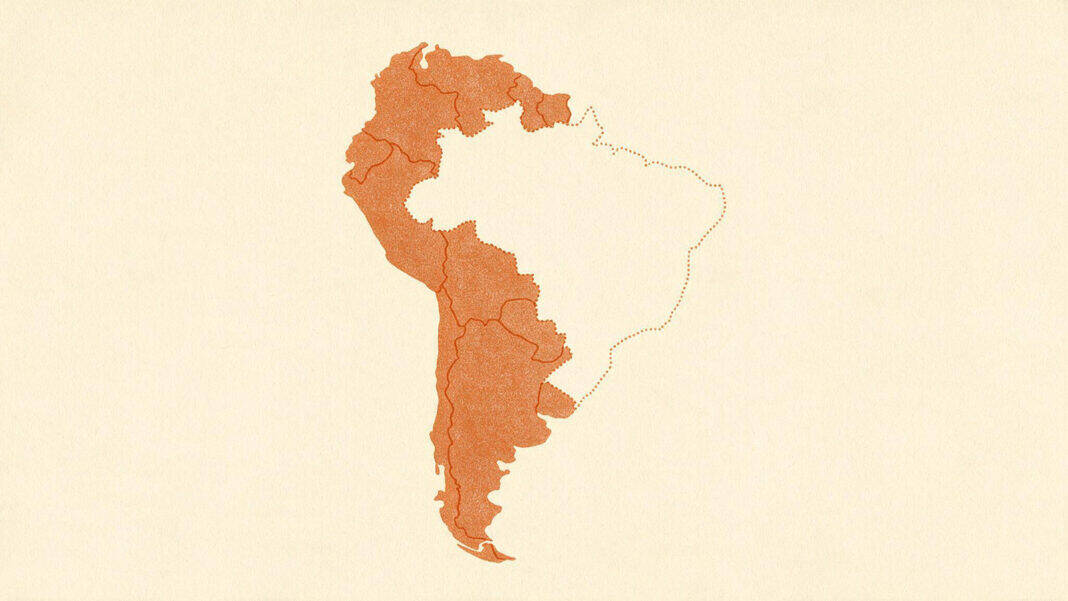


Roughly 600,000 Arabic speakers from the Levant resettled in the Americas between the 1860s and 1914, leaving a declining Ottoman Empire for Brazil, Argentina, Chile, Mexico and beyond. Their surnames — Mebarak, Hayek, Slim, Nader — are now unremarkably Latino.
They arrived on Ottoman papers and were labelled turcos, which was wrong then and is still wrong now.
Who actually left, and why
The migrants came from what is now Lebanon, Syria, Palestine and Jordan. According to Americas Quarterly, about 600,000 Arabic speakers from the Levant resettled in the Americas in that first wave, from the 1860s through 1914, with Chile, Argentina, Brazil and Paraguay among the main destinations.
Georgetown’s Center for Contemporary Arab Studies puts the Brazilian side more precisely: around 150,000 people migrated from the Eastern Mediterranean to Brazil starting in the late 1870s, most from areas that later became Lebanon and Syria, during a period marked by the collapse of the silk industry. Economic collapse, not adventure.
The “turco” label was not affectionate
These migrants were not Turkish. They were called turcos because they travelled on Ottoman-issued passports, and customs clerks wrote down what the paperwork said.
It is often described today as a warm nickname, and in many families it now is. That was not how it started. Americas Quarterly records that in Argentina “the stereotype of the ‘wily’ Levantine immigrant peddler created a lasting association between ‘turcos’ and corruption” — a stereotype later attached to President Carlos Menem, whose corruption scandals some attributed to his Syrian Muslim background.
A slur can soften into a nickname over a century. It is worth knowing which one it was to begin with. The same tangle of imposed labels runs through the Hispanic and Latino categories — names assigned by paperwork rather than chosen.
The surnames you already know
Two of the most recognised Latinas alive carry Lebanese surnames. Shakira’s full name is Shakira Isabel Mebarak Ripoll; her paternal grandparents were Lebanese, and in 2018 she performed in Tannourine, the northern Lebanese town her grandmother came from. Salma Hayek’s father is Lebanese Mexican, from Baabdat; her mother’s side is of Spanish descent.
- Mebarak — Shakira, Colombian-Lebanese
- Hayek — Salma Hayek, Mexican-Lebanese
- Slim — Carlos Slim, Mexican-Lebanese
- Bukele, Nader, Saca — common across Central and South America
How many people are we talking about
This is where the honest answer is “nobody precisely knows.” Brazil’s census does not measure Arab ancestry, so every figure in circulation is an estimate produced by a government or a chamber of commerce.
Brazil’s Ministry of Foreign Affairs estimates between 7 and 10 million people of Lebanese descent in the country. The Arab-Brazil Chamber of Commerce has claimed 12 million people of Arab descent. Writing for Georgetown, Diogo Bercito treats these carefully — they “need to be read with a grain of za’tar, as taking them at face value would mean that more people of Lebanese descent live in Brazil than in Lebanon, which has a total population of under 7 million.”
So: the community is genuinely enormous, Brazil’s is the largest anywhere outside Lebanon, and the specific numbers are advocacy estimates rather than counts. All three of those things are true at once.
What came with them besides names
The migration changed dinner. The clearest case is tacos al pastor, born when Lebanese immigrants in Mexico adapted spit-roasted shawarma into something unmistakably Mexican. Kibbeh became kibe at Brazilian street stands. Nobody thinks of either as foreign food now.
Frequently Asked Questions
Why do some Latinos have Arabic last names?
Because roughly 600,000 Arabic speakers from Lebanon, Syria and Palestine settled across the Americas between the 1860s and 1914, and their surnames passed down through generations.
What does “turco” mean for Latinos?
A nickname for Latinos of Arab descent, taken from the Ottoman passports the migrants carried. It began as a stereotype — Americas Quarterly documents a lasting association in Argentina between “turcos” and corruption — though in many families it is now used warmly.
Is Shakira actually Lebanese?
Shakira is Colombian, born in Barranquilla, with Lebanese heritage on her father’s side. Her surname Mebarak is Lebanese, and she performed in Tannourine, her grandmother’s home village, in 2018.
Which Latin American country has the most people of Arab descent?
Brazil. Its Ministry of Foreign Affairs estimates 7 to 10 million people of Lebanese descent, the largest such community anywhere outside Lebanon — though these are estimates, not census counts.
Are most Arab Latinos Muslim or Christian?
The early waves were predominantly Christian villagers from Mount Lebanon and Syria. Muslim and other communities migrated too, but the foundational diaspora was largely Christian.
When did Arab migration to Latin America begin?
The first major wave ran from the 1860s to 1914, out of the declining Ottoman Empire. Migration to Brazil specifically began in the late 1870s.
Levantine migration is one of several histories folded invisibly into “Latino.” Others: the Garífuna, Afro-Latino identity, and Brazil’s exclusion from the official US definition.
Sources
- “The Surprisingly Deep, Centuries-Old Ties Between the Middle East and Latin America” Americas Quarterly.
- “From Beirut to Brazil” Diogo Bercito, Center for Contemporary Arab Studies, Georgetown University.
Researched and written by Victor Ramirez. Edited and fact-checked by Mia Alejandra Umphrey. Drafting assisted by AI; population figures are government and chamber-of-commerce estimates, not census counts, and are presented as such. See our editorial standards.

Part of our guide to Latino Identity Explained.