
Archive. This is coverage Wehpa published in 2026 — an interview, profile or event report rather than a researched explainer. It has not been fact-checked against our current sourcing standards, and details in it may have been overtaken by events. We keep it up because it is part of the record.
Spotted something wrong? [email protected].
“Everybody forgets about the business side of it.”
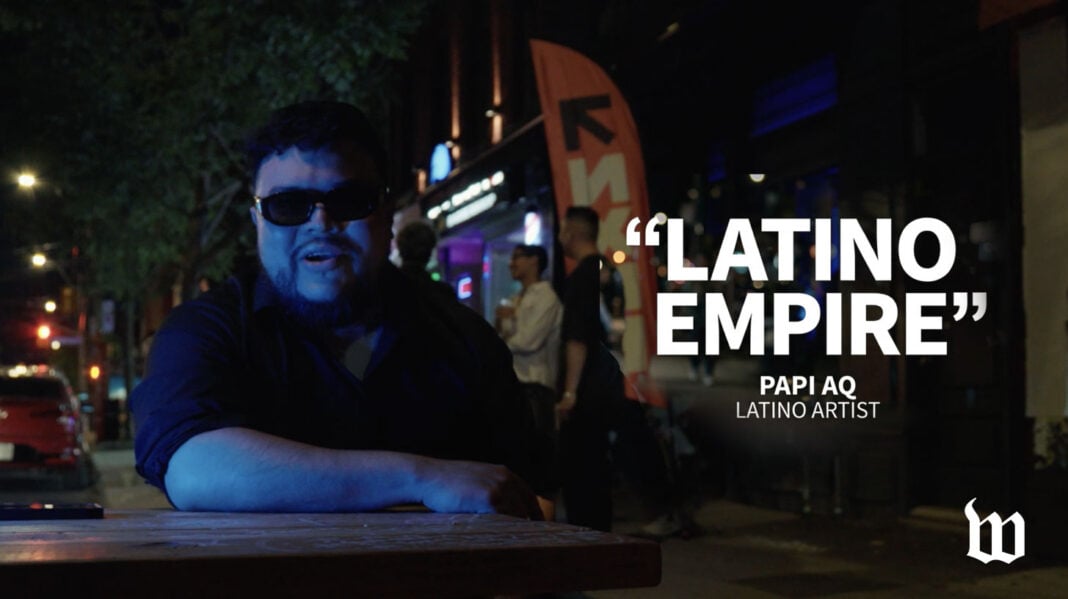
That’s the line the whole film turns on.“The biggest disconnect between artists and this industry is that a lot of artists come out because they fall in love with making the music. The music is a magical thing — but everybody forgets about the business side of it. Opportunities like this only happen when you understand the business, when you’re able to put yourself into rooms with networking, being able to communicate different things. Those stepping stones are essential to building an artist’s career.”It’s an unusual thing to hear from an artist mid-recap. Most performance films sell you the fantasy — the fog, the flex, the crowd screaming a hook back. PAPI AQ wanted to talk about the part nobody films: the phone calls, the rooms, the relationships, the slow unglamorous work of building something that lasts. That honesty is exactly why we pointed the camera at him. PAPI AQ isn’t just an artist. He’s building the infrastructure — the rooms, the network, the stepping stones — that Latino and diaspora artists in Canada have never really had handed to them.
“A lot of artists are missing that. Not enough infrastructure, not enough business knowledge to really maneuver. That’s something I struggled with for a long time. But little by little, we’re learning. I’m lucky to have peers I share this knowledge with, and they share it with me as well.”That last part matters. This isn’t a lone-genius story. It’s a we story — a small circle of people teaching each other how to move, because no one was going to teach them otherwise.
From “showcase ourselves” to wildfire
What started as something small — a way to put himself and his people on — didn’t stay small.“We started out with something we created just to be able to showcase ourselves. And it just started growing like wildfire. Now, to be able to not only help and develop the Latino community, but the Caribbean, the African community too — I think it’s beautiful. That connection is really what was needed in this industry. In Canada, a lot of these minority cultures and this music are really under-helped. It’s a real underdog story.”Read that again, because it’s the whole mission in a sentence: a thing built to showcase ourselves that grew into a thing that lifts everybody. Latino, Caribbean, African diaspora — the communities that Canadian music has historically left on the margins, now sharing one stage, one crowd, one night. PAPI AQ says this was the first year NXNE made Latin a category. PAPI AQ gives the credit away — “shout out to the journalists for making that a category this year” — but everyone in that room knew what years of grinding it took to force that door open.
“It took a while to get to where we are right now. I really just started this as something to put myself on — I didn’t have any idea it would start catching this much popularity, going as crazy as it’s going. But I’m thankful for it.”
Everybody coming to us
The flex isn’t just playing a festival. It’s the reversal.“Last session we had a DJ come in from New York, from Brooklyn. We’re looking to have DJs from Miami coming out. I’ve got artists coming in from Montreal, from different parts of Canada, to come perform in the Six — in Toronto. Normally, Latinos from Toronto are going everywhere else to play these festivals. But this time around, we’ve got everybody coming to us. That’s really what sets the tone.”That’s the whole thesis of the night in one sentence. Toronto as a destination, not a departure lounge. For a scene that’s spent years exporting its best talent, that reversal isn’t a small thing — it’s the entire point. You don’t have to leave home to be seen. You can build home into the place people travel to.
Why the room matters
There’s a reason this went down at Poetry Jazz Cafe, and a reason it went down at NXNE. Poetry Jazz Cafe is one of those Toronto rooms with a memory — a spot that’s held years of Black and brown music, spoken word, and late-night sets. And NXNE is one of the marquee festivals in the country, the kind of platform that decides which scenes get called “the culture” and which get called “a niche.” For a Latino headliner to fill that room, at that festival, in that city, is a line in the sand. It says the diaspora isn’t waiting outside the building anymore. It’s on the bill. And it lands differently in Canada specifically. Down south, Latino music has Miami, has New York, has an industry built to catch it. Up here, the same artists have spent years being treated like an afterthought — booked last, funded least, covered rarely. So when PAPI AQ talks about it being “a real underdog story,” he’s not being humble. He’s being accurate. What you’re watching in this film is a scene that had to build its own ladder, rung by rung, and is only now getting to climb it in public.The night itself
Diego Vara shoots it like it deserves to be shot — cinematic, close, unhurried. You feel the room before you hear a bar. The backstage quiet before the set. The blue wash of the Poetry Jazz Cafe. The crowd holding phones over their heads. And then the afterparty, red-lit and sweaty, the DJ going, the night refusing to end. It’s a performance film, sure. But it plays like a document of a scene catching fire in real time — the moment a community stopped asking for a seat and built the table.What’s next
PAPI AQ’s not slowing down: more sessions, more out-of-town talent pulled into Toronto, merch, and — in his words — “exclusive drops you can only get if you’re in certain places at the right time.” Keep your eyes open.“Expect more presence, more presence, more music. It’s crazy — I’ve watched so many years go by, seen so many artist friends perform before me. And now, officially, it’s my set.”That’s the note the film ends on. The crowd goes up. The lights hold. And you get the sense this is a beginning, not a highlight. Why Wehpa made this This is exactly the kind of story Wehpa exists to tell — the culture our communities are building for themselves, in real time, told by the people building it. PAPI AQ turned a festival slot into a statement about ownership, business, and bringing the diaspora home to the Six. He didn’t wait for the industry to make room. He built the room. We just pointed the camera and got out of the way. If this hit you, share it. Send it to the artist in your life who’s got the talent but not the room yet. That’s how the wildfire spreads. Credits
- Artist: PAPI AQ
- Director: Diego Vara
- Venue: Poetry Jazz Cafe — NXNE, Toronto
- Presented by: Wehpa
Toronto has become a real node in Latin music, not an outpost of one. The sound Papi AQ is working in traces back through reggaeton’s Jamaican and Panamanian roots, and more of this coverage lives on Wehpa TV.