
The short version: Can Puerto Ricans vote for president? Yes and no. Puerto Ricans have been U.S. citizens since 1917, but residents of the island cannot vote in the November presidential general election because Puerto Rico is a territory, not a state, and only states have Electoral College votes. Puerto Ricans who move to a state can vote like any other citizen.
It is one of the most misunderstood facts in American civics, and it touches more than three million proud Boricuas: full U.S. citizenship that nonetheless stops short of the presidential ballot. The story is not a slogan. It is a century of law, geography, and the difference between a territory and a state. Let’s walk through it with pride and clarity.
So, can Puerto Ricans vote for president?
If you are living on the island, the answer is no, they cannot cast a ballot in the general election. If you are asking whether a Puerto Rican person can ever vote for president, the answer is absolutely yes. The deciding factor is not your heritage or your passport. It is your home address.
- A Puerto Rican living in San Juan: no vote in the presidential general election.
- A Puerto Rican living in Orlando, the Bronx, or Chicago: full vote, just like any other registered citizen.
- The citizenship is identical in both cases. Only the geography changes the outcome.
Citizens since 1917: the Jones-Shafroth Act
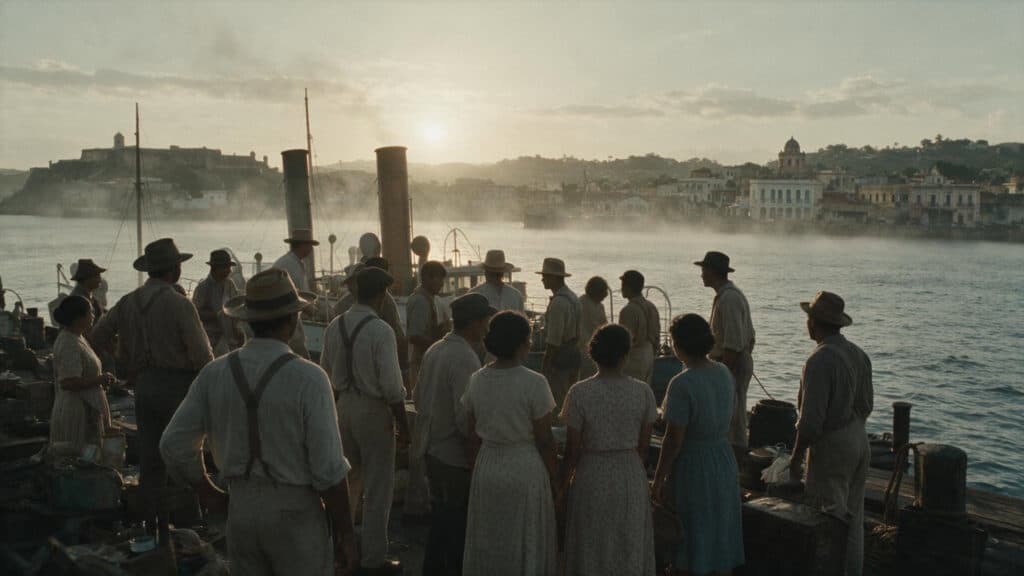
Puerto Ricans did not vote their way into U.S. citizenship and they did not lose anything to fall short of the ballot. Congress granted citizenship through the Jones-Shafroth Act, which President Woodrow Wilson signed into law on March 2, 1917, according to the Library of Congress. That law made Puerto Ricans U.S. citizens by birth, a status that has held for more than a century.
Here is the part that surprises people: the same 1917 law that delivered citizenship did not deliver a vote for president. Citizenship and presidential voting are two separate things in U.S. law, and the Jones-Shafroth Act handled only the first.
Territory vs. state: why the Electoral College is the real answer
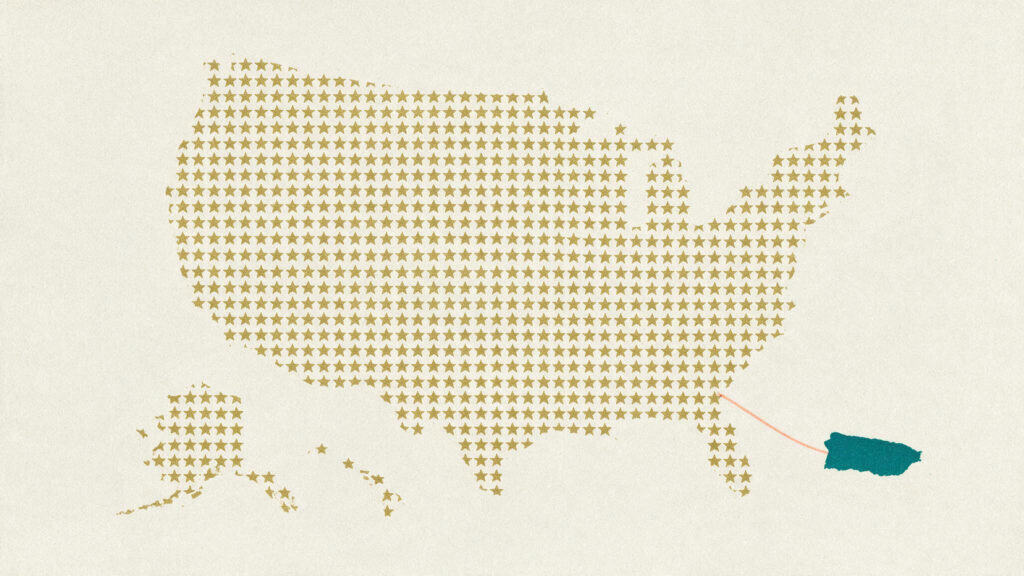
The president is not elected by a single national popular vote. The president is chosen by the Electoral College, and electors are allotted to the 50 states and the District of Columbia. The National Archives explains that the process does not provide for residents of U.S. territories, including Puerto Rico, Guam, the U.S. Virgin Islands, the Northern Mariana Islands, and American Samoa, to vote for president.
So the barrier is structural, not personal. Because Puerto Rico is a territory rather than a state, it has no electors to send to the College. No electors means no presidential vote on the island, no matter how many citizens live there. This is the same reason Puerto Rico has a non-voting Resident Commissioner in Congress instead of full voting senators and representatives.
Can Puerto Ricans vote for president in the primaries?
Here is a twist that trips up even lifelong news watchers. There is one big yes here: the primaries. Puerto Rico participates in the presidential primary and caucus season, where the major parties pick their nominees. Island residents can and do help choose who appears on the November ballot.
What they cannot do from the island is vote in the general election that actually awards Electoral College votes. So Boricuas on the island help decide the finalists, then sit out the final round. It is a real distinction worth knowing before any election cycle heats up.
The mainland move that changes everything
None of this is a one-way door. A Puerto Rican who establishes residency in any state immediately gains the right to register and vote for president there, no new citizenship paperwork required. That is why the growing Puerto Rican communities in Florida, New York, Pennsylvania, and Texas carry real weight in national elections. The vote travels with the person the moment the address changes.
This pride in roots shows up everywhere in the culture, from the cooking debates over whether mofongo is Puerto Rican or African to the way fans still honor the legacy of Roberto Clemente. The identity is unshakable. The civics are just a separate question. And if the words themselves get confusing, our guide on the difference between Hispanic and Latino clears up another common mix-up.
Watch: No, residents of Puerto Rico cannot vote for president
Frequently asked questions
Are Puerto Ricans U.S. citizens?
Yes. Puerto Ricans have been U.S. citizens by birth since the Jones-Shafroth Act became law on March 2, 1917. That citizenship is full and permanent and does not depend on living in a state.
Why can’t Puerto Ricans on the island vote for president?
Because Puerto Rico is a U.S. territory, not a state, and only states and Washington, D.C., have Electoral College votes. Without electors, there is no presidential general election ballot on the island.
Can a Puerto Rican vote for president if they move to the mainland?
Yes. The moment a Puerto Rican establishes residency in a state, they can register and vote for president there. No additional citizenship steps are needed because they are already U.S. citizens.
Can Puerto Rico vote in presidential primaries?
Yes. Puerto Rico takes part in the parties’ presidential primaries and caucuses, helping pick each party’s nominee. The restriction applies only to the general election that awards electoral votes.
Does Puerto Rico have representation in Congress?
Puerto Rico elects a Resident Commissioner who serves in the U.S. House but cannot cast final floor votes. The island has no voting senators or representatives, which mirrors why it has no presidential electors.
Sources
- “Jones-Shafroth Act” Latinx Civil Rights research guide, Library of Congress.
- “Electoral College FAQ” US National Archives — on territories and presidential electors.
Researched and written by Victor Ramirez. Edited and fact-checked by Mia Alejandra Umphrey. Drafting assisted by AI; this article already cited the Library of Congress and the National Archives inline; those citations are now collected here and the piece carries a byline. See our editorial standards.

Part of our guide to Latino Identity Explained.