
The short version: Cinco de Mayo is not Mexican Independence Day. It marks the Battle of Puebla on May 5, 1862, when a smaller Mexican army defeated invading French forces. In Mexico it is a minor regional holiday; in the United States it grew into a Mexican-American celebration that beer companies later turned into a marketing event. Mexican Independence Day is September 16.
Every May 5, restaurants run margarita specials, beer companies blast ads, and someone in a sombrero will inevitably wish you a happy “Mexican Independence Day.” That last part is wrong. It’s not even close.
Mexican Independence Day is September 16, marking the 1810 Grito de Dolores when Father Miguel Hidalgo rang a church bell in the town of Dolores and called for a revolt against Spain. Cinco de Mayo is something else entirely — a date most of Mexico barely acknowledges, that became a major American holiday for reasons that have very little to do with Mexico itself.
What actually happened on May 5, 1862
In the early 1860s, Mexico was broke. President Benito Juárez suspended foreign debt payments. France, Spain and Britain sent forces to collect. Spain and Britain negotiated and went home. France — under Napoleon III, with imperial ambitions in the Americas — decided to invade.
The French Army at the time was considered the best on Earth. They hadn’t lost a battle in fifty years. They marched on Puebla expecting a routine victory.
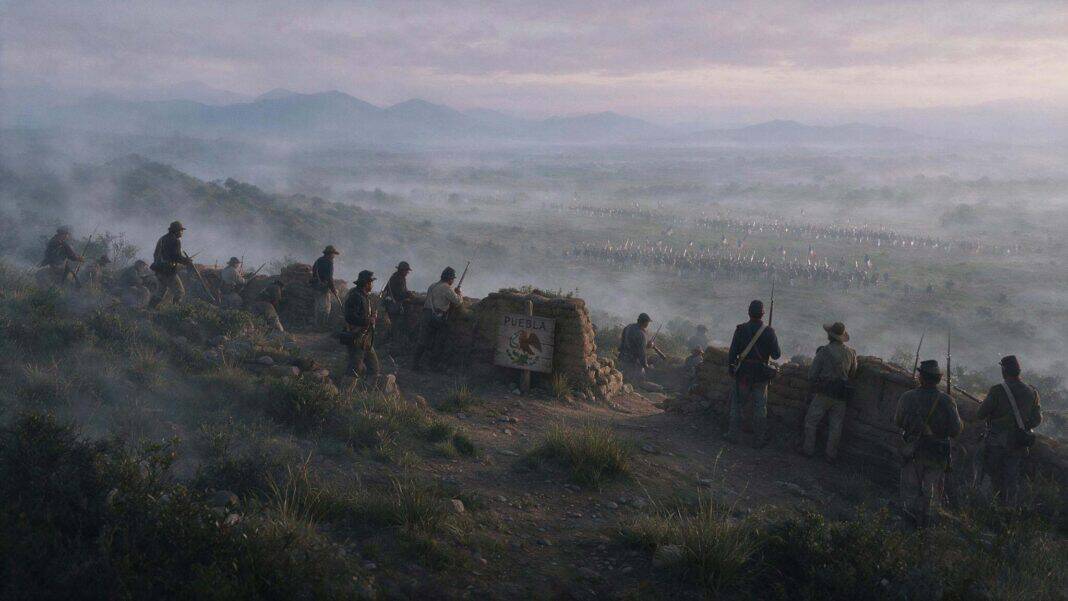
Mexican General Ignacio Zaragoza had roughly 4,500 troops, many of them Indigenous farmers and poorly equipped soldiers. The French had about 6,000 professional soldiers with superior weapons. The Battle of Puebla on May 5, 1862, ended with the French in retreat and Mexico holding the field.
It was a David-and-Goliath moment. It didn’t win the war — France took Mexico City a year later and installed an Austrian archduke named Maximilian as emperor of Mexico. But the Battle of Puebla became a symbol. A reminder that an empire could lose to people fighting for their own land.
How it became a Mexican-American holiday before it was an American one
Here’s the part most people miss. In 1862, the United States was in the middle of its own civil war. Confederate forces were fighting to preserve slavery, and the French intervention in Mexico was viewed by many Mexican-Americans as another front in the same fight against European colonial power.
Mexican-American communities in California, particularly in mining towns and farming regions, organized the first Cinco de Mayo celebrations in the months after the Battle of Puebla. They gathered, gave speeches, raised money, and treated the day as an act of solidarity — both with Mexico and with the Union cause. Historians at UCLA have documented these gatherings as some of the earliest organized Latino civic events in the United States.
For a hundred years, Cinco de Mayo stayed mostly within Mexican-American communities as a small cultural and political holiday.
How beer happened
In the late 1980s, American beer companies — Coors, Miller, Anheuser-Busch — saw an untapped marketing opportunity. They poured advertising dollars into Cinco de Mayo, positioned it as a Mexican party day, and reframed it for a mainstream American audience.
It worked. By the 2000s, Cinco de Mayo had become one of the biggest beer-selling days in the United States. Tequila and Corona alone now generate hundreds of millions of dollars on May 5 every year. In Mexico itself, it remains a regional holiday celebrated mainly in Puebla — not a federal day off, not a national party.
What the day is actually about
Cinco de Mayo is about a defeated army that wasn’t supposed to win. About Mexican-American communities who saw a connection between their fight and a battle 1,500 miles away. About a holiday that survived a century in the margins before being repackaged and sold back to the people who made it.
You don’t have to skip the margaritas. Just know what you’re toasting. The Battle of Puebla wasn’t about Mexican independence. It was about the moment a colonized people pushed an empire back across a field — and the moment Mexican-Americans across California decided that story belonged to them too.
The two dates, side by side
| Cinco de Mayo | Mexican Independence Day | |
|---|---|---|
| Date | 5 May | 16 September |
| Year | 1862 | 1810 |
| Event | Victory at the Battle of Puebla | Start of the war of independence |
| Against | France | Spain |
| Marks | One battle won | The independence movement beginning |
| Bigger in | The United States | Mexico |
Frequently asked questions
Is Cinco de Mayo Mexican Independence Day?
No. Mexican Independence Day is September 16, marking the 1810 Grito de Dolores against Spain. Cinco de Mayo marks the Battle of Puebla on May 5, 1862.
What does Cinco de Mayo celebrate?
The Mexican army victory over a larger, better-equipped French force at the Battle of Puebla on May 5, 1862, under General Ignacio Zaragoza.
Why is Cinco de Mayo bigger in the U.S. than in Mexico?
In Mexico it is a minor regional holiday, mainly in Puebla. In the United States, Mexican-American communities embraced it early, and in the 1980s beer and tequila companies commercialized it into a national party day.
When is Mexican Independence Day?
September 16, marking Father Miguel Hidalgo Grito de Dolores in 1810, the call that began the war for independence from Spain.
Who won the Battle of Puebla?
Mexico won, defeating the French army that was considered the best in the world at the time, though France captured Mexico City a year later.
Cinco de Mayo is not the only piece of Mexican and Mexican-American culture that arrives in the United States with its meaning rearranged. The same thing happened to the zoot suit, to Chicano caló, and to the words people use for themselves — which is its own tangle, as Hispanic, Latino, Latinx and Latine shows.
Sources
- “The Real History of Cinco de Mayo”, Smithsonian Institution.
- “The Battle of Puebla, May 5, 1862 and Cinco de Mayo”, Pritzker Military Museum & Library.
Researched and written by Victor Ramirez. Edited and fact-checked by Mia Alejandra Umphrey. Drafting assisted by AI; all facts verified against the sources above before publication. See our editorial standards.
Part of our guide to Latino Identity Explained.