
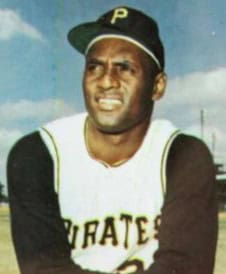
The short version: The Roberto Clemente legacy belongs to the Afro-Puerto Rican right fielder who collected exactly 3,000 hits, won a World Series with the Pittsburgh Pirates, and died on December 31, 1972, when his relief plane bound for earthquake-stricken Nicaragua crashed into the sea. In 1973 he became the first Latino inducted into the National Baseball Hall of Fame.
Few athletes are remembered as much for how they lived as for how they played. Roberto Clemente was both a transcendent ballplayer and a humanitarian whose final act cost him his life. For Latino fans across the diaspora, he remains a symbol of pride, dignity, and service that reaches far beyond the diamond.
Who was Roberto Clemente?
Roberto Clemente Walker was born on August 18, 1934, in Carolina, Puerto Rico, the youngest of seven children. By 17 he was playing for the Santurce Crabbers of the Puerto Rican league, and by 1955 he had debuted in the major leagues with the Pittsburgh Pirates. As an Afro-Puerto Rican breaking into a still-segregating sport, he faced both racial prejudice and language barriers, often quoted in broken English by reporters who underestimated him.
On the field, there was no underestimating him. According to the Britannica biography of Roberto Clemente, he won four National League batting titles and the 1966 NL Most Valuable Player Award, and he claimed 12 consecutive Gold Gloves for his legendary defense in right field.
The Roberto Clemente legacy on the field
The Roberto Clemente legacy is built on a career that married elegance with raw competitiveness. He led the Pirates to two World Series championships, in 1960 and 1971, and was named MVP of the 1971 Fall Classic after a dominant seven-game performance against the Baltimore Orioles. His arm was so feared that runners simply stopped testing it.
Then came the milestone. On September 30, 1972, Clemente laced a double for his 3,000th career hit, becoming just the 11th player in history to reach the mark, per the National Baseball Hall of Fame. It would be the final regular-season hit of his life. He finished his career with a .317 batting average and a reputation as one of the most complete players the game has ever produced.
The relief flight that ended a life
On December 23, 1972, a catastrophic earthquake leveled Managua, Nicaragua, killing thousands. Clemente, who had visited the country weeks earlier, threw himself into organizing aid. When he heard that aid was being siphoned off before reaching victims, he decided to accompany the next shipment personally.
- On December 31, 1972, his overloaded Douglas DC-7 took off from San Juan carrying relief supplies.
- The aircraft developed engine trouble after takeoff and crashed into the Atlantic about a mile off the coast of Puerto Rico.
- Clemente was 38 years old. His body was never recovered.
He died doing exactly what he preached: using his fame in the service of others.
How the Roberto Clemente legacy reshaped the Hall of Fame
The Roberto Clemente legacy changed baseball’s rules of honor. The Hall of Fame normally requires a five-year waiting period after a player retires, but in March 1973 the Baseball Writers’ Association of America held a special election and waived that period. Clemente received 393 of 424 votes, making him the first Latin American-born player elected to the Hall of Fame.
That same year, Major League Baseball renamed its top humanitarian honor the Roberto Clemente Award, given annually to the player who best combines on-field excellence with community service.
Why Clemente still matters to Latino culture
Clemente insisted on his full identity at a time when many were pressured to shrink it, refusing to anglicize his name and speaking openly about discrimination. His Afro-Caribbean roots connect to broader threads of Latino heritage, from the Garifuna history of the Caribbean coast to the African and Indigenous influences that shape island life, including dishes whose origins spark debate like whether mofongo is Puerto Rican or African. His story is also a reminder of why the terms we use matter, as explored in the difference between Hispanic vs Latino. For millions, he is proof that pride in your roots and greatness on the world stage are not in conflict.
Watch: The legacy of one of baseball’s all-time greats
Frequently asked questions
How did Roberto Clemente die?
He died on December 31, 1972, when the chartered Douglas DC-7 plane carrying earthquake relief supplies to Nicaragua crashed into the ocean off Puerto Rico shortly after takeoff. He was 38, and his body was never recovered.
Was Roberto Clemente the first Latino in the Baseball Hall of Fame?
Yes. In 1973 he became the first Latino and Caribbean-born player inducted into the National Baseball Hall of Fame, elected in a special vote that waived the standard five-year waiting period.
How many hits did Roberto Clemente have?
He finished with exactly 3,000 career hits. He reached the milestone on September 30, 1972, in what turned out to be the final regular-season hit of his life.
What is the Roberto Clemente Award?
It is Major League Baseball’s annual honor, renamed for him in 1973, recognizing the player who best combines excellence on the field with meaningful community and humanitarian work off it.
Was Roberto Clemente Afro-Latino?
Yes. Clemente was an Afro-Puerto Rican who spoke openly about facing racial discrimination during his career and took pride in his Black and Caribbean heritage throughout his life.
Watch on Wehpa
Stream Latino stories, sports legends, and culture for free on Wehpa TV, now available on Roku.
Sources
- “Roberto Clemente records 3,000th hit in final regular-season at-bat” National Baseball Hall of Fame and Museum.
- “Clemente elected to Hall of Fame only months after crash” National Baseball Hall of Fame and Museum.
Researched and written by Victor Ramirez. Edited and fact-checked by Mia Alejandra Umphrey. Drafting assisted by AI; all facts verified against the sources above before publication. See our editorial standards.

Part of our guide to Latino Identity Explained.