
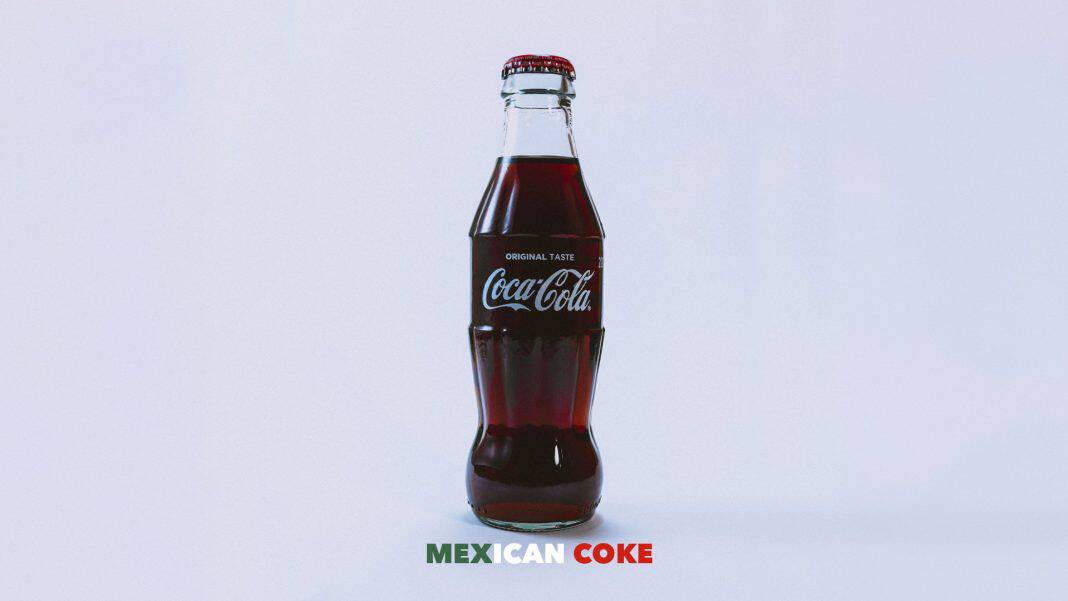
The short version: Mexican Coke tastes different from American Coke mostly because it is made with cane sugar, while Coca-Cola in the United States uses high-fructose corn syrup. The glass bottle, a hint of nostalgia, and slightly different processing do the rest. The core formula is otherwise nearly identical.
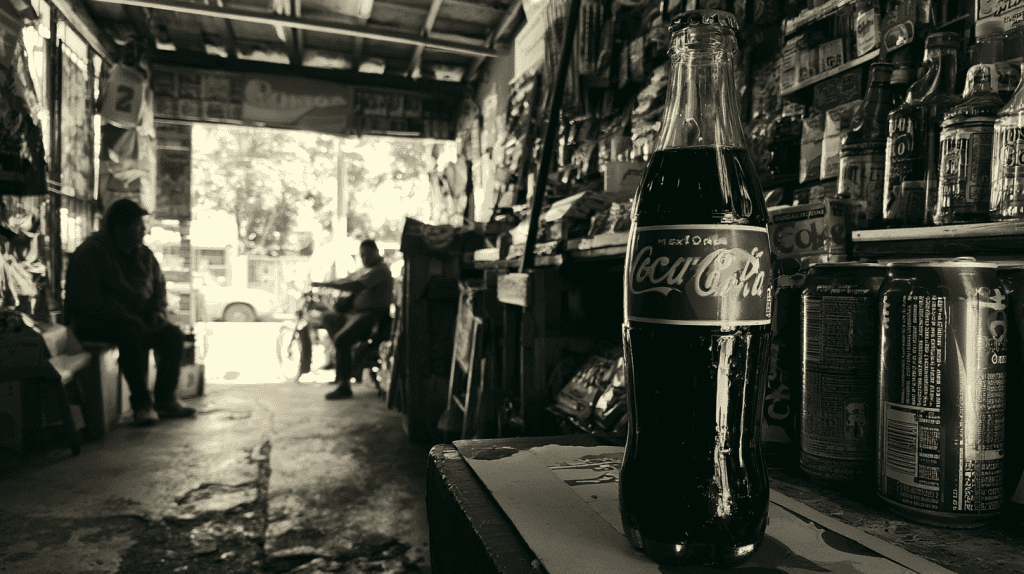
Walk into any taquería, Latino grocery, or — these days — Costco, and you’ll find the green-tinted glass bottle with Spanish on the label. People pay more for it. They swear it tastes better, cleaner, more like the Coke they remember as kids. They’re not imagining it. Mexican Coke really is a different drink, and the reason why is one part chemistry and one part trade policy.
The one ingredient that changes everything
American Coca-Cola is sweetened with high-fructose corn syrup (HFCS). Mexican Coca-Cola is sweetened with cane sugar (sucrose). That’s the whole headline.
It wasn’t always this way. Coke in the United States was made with cane sugar too — until the early 1980s. Coca-Cola had completed the switch to HFCS in bottled and canned U.S. Coke by 1984. Sixty years of muscle memory in American taste buds got quietly rewritten, and a lot of people have been chasing the old flavor ever since without knowing what changed.
So why did the U.S. switch and Mexico didn’t?
This is where it stops being about soda and starts being about government policy.
In the U.S., sugar tariffs and import quotas kept cane sugar expensive — the tariff-rate quota system the USDA still documents today. HFCS was the cheaper sweetener — so Coke and Pepsi switched to it.
Mexico had no such incentive. It grows its own cane sugar, so sucrose stayed the cheap, default choice. Same brand, same global company, two different sweeteners — entirely because of where the line on a government spreadsheet landed.
The NAFTA chapter
Here’s the twist most people don’t know. After NAFTA opened up trade in 1994, the U.S. and Mexico spent years locked in a sweetener trade war — American HFCS producers wanted to sell into Mexico, Mexican sugar producers wanted to sell into the U.S., and both governments slapped taxes and tariffs to protect their own. Mexico even briefly taxed soft drinks made with HFCS, which pushed its bottlers to stick with cane sugar.
So the same trade era that flooded both countries with each other’s goods is also part of why Mexican Coke kept its old recipe — and why, a few years later, that bottle started showing up on American shelves as a premium import. A drink became a souvenir of a trade dispute.
The glass bottle matters too
It’s not only the sweetener. Mexican Coke usually comes in glass, while most American Coke comes in plastic or aluminum. Plastic bottles can let in tiny amounts of air and leach faint flavors over time; aluminum cans have a liner. Glass is inert — it doesn’t talk back to the soda. A cold Coke from glass genuinely tastes crisper, and that’s before you factor in the sugar.
Is it really “better,” or is it nostalgia?
Honestly, both. Blind taste tests are mixed — some people can reliably pick the cane-sugar version, plenty can’t. But taste isn’t just chemistry. For a lot of Latinos, Mexican Coke tastes like a grandmother’s kitchen, a fonda on a hot afternoon, a bottle opener on the edge of a counter. That memory is doing real work on the tongue. The cane sugar gives it a cleaner, slightly less cloying finish; the nostalgia does the rest.
There’s even an American echo of this: every spring around Passover, Coca-Cola releases a kosher version made with real cane sugar (look for the yellow cap). Sugar Coke loyalists stock up on it like it’s a seasonal crop.
The update: it is coming back
This article used to end by saying the taste had been legislated out of the American bottle. That is no longer accurate. In 2025 Coca-Cola announced a US cane-sugar cola, and — as Fox Business reported — began a phased rollout in select markets in 12-ounce glass bottles. The company has called it a measured rollout, pointing to limited US cane sugar supply.
So the honest position now: for forty years the cane-sugar version was effectively a Mexican import, and that is why the bottle became a cult object. It is currently being reintroduced domestically, unevenly, and the thing that made it scarce in the first place — the sugar programme — has not gone anywhere.
The takeaway
Mexican Coke is not a marketing gimmick or a placebo. It is a genuinely different formulation — cane sugar instead of corn syrup, glass instead of plastic — kept that way by Mexico’s farms and by decades of trade policy on both sides of the border. The difference you taste is real. What has changed is that the American bottle is finally, slowly, being allowed to taste like it again.
Frequently asked questions
Why does Mexican Coke taste better?
Many people prefer it because it is sweetened with cane sugar instead of high-fructose corn syrup, and it comes in a glass bottle. Blind taste tests are actually mixed — nostalgia and packaging do a lot of the work.
Is Mexican Coke made with real sugar?
Yes. Mexican Coke uses cane sugar (sucrose), while Coca-Cola bottled in the United States uses high-fructose corn syrup.
Is Mexican Coke healthier than American Coke?
Not meaningfully. Both are sugar-sweetened sodas with similar calories and sugar content; cane sugar is not significantly healthier than corn syrup.
Why is Mexican Coke more expensive?
Import costs, the heavier glass bottle, and its premium, nostalgia-driven positioning in the U.S. market.
Is Mexican Coke the same formula as American Coke?
Nearly identical. The main differences are the sweetener (cane sugar vs corn syrup) and the glass-bottle packaging.
Mexican Coke is a small case of a bigger pattern: things taste different when they stay close to where they were made. The same argument runs through elote, tamales, and the crops the Americas gave the rest of the world.
Is Mexican Coke going to stop being special?
Possibly, in part. Coca-Cola began rolling out a US cane-sugar cola in glass bottles in 2025. Availability is still limited.
Sources
- “Sugar and Sweeteners: Policy” USDA Economic Research Service — the US sugar programme, tariff-rate quotas and price supports.
- “Coca-Cola officially rolls out cane sugar soda across US markets” Fox Business — the 2025–26 rollout.
Researched and written by Victor Ramirez. Edited and fact-checked by Mia Alejandra Umphrey. Drafting assisted by AI. Two changes on review: a Reddit thread was cited as the source for a claim about federal corn subsidies and has been replaced with the USDA, and the article’s conclusion was out of date — Coca-Cola began reintroducing a US cane-sugar cola in 2025. See our editorial standards.

Part of our guide to Latin Food Origins.