
Mexico counted its Black population for the first time in 2020: 2,576,213 people, about 2 percent of the country. That was the first national headcount in more than two centuries of independent Mexico.
The heritage it measured is five hundred years old. The measurement is five years old.
The third root
Mexicans often describe the nation as built on three roots: Indigenous, Spanish, and — la tercera raíz — African. Africans arrived almost immediately after the conquest, many through the port of Veracruz in the 1500s and 1600s, to labour on cattle ranches, in sugar mills and in mines.
Official recognition of that third root only began in 1992, with constitutional recognition following in 2019 and the census question in 2020. The heritage ran through the whole colonial period; the acknowledgement is recent.
The Costa Chica
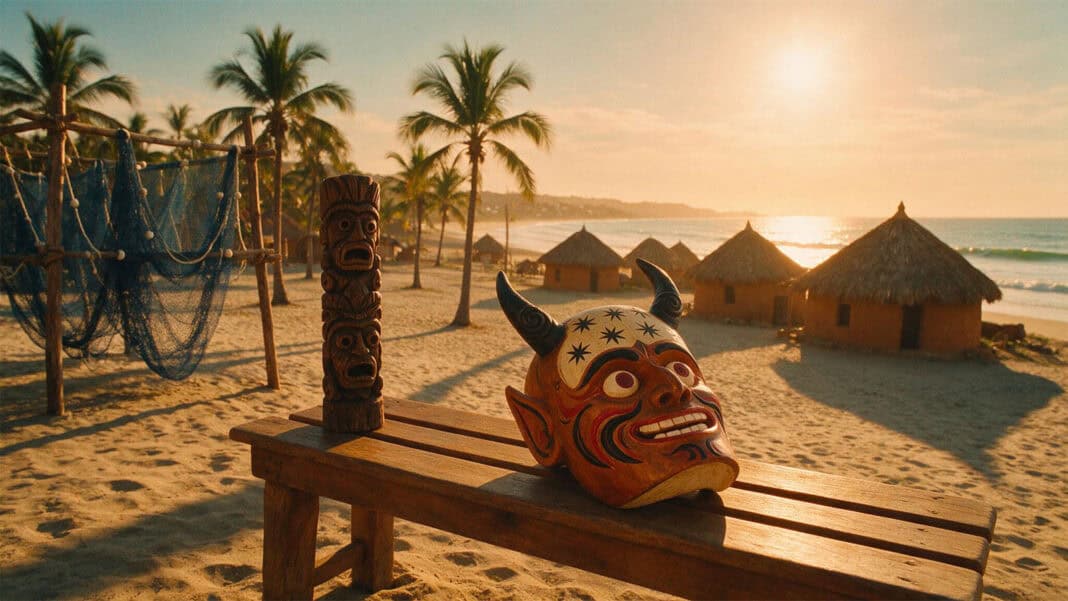
If the third root has a heartland it is the Costa Chica, a stretch of Pacific coast across Guerrero and Oaxaca. Many families there descend from Africans brought between the sixteenth and eighteenth centuries to work coastal ranches, and the region’s isolation helped distinct traditions survive.
- Music and dance — the danza de los diablos, and la artesa, a courtship dance performed on a wooden trough.
- Architecture — round adobe-and-thatch houses known as redondos.
- Foodways — coastal seafood cooking layering African, Indigenous and Spanish technique.
- Organising — activists in towns such as Cuajinicuilapa spent decades pressing for recognition.
Large Afro-descendant communities also live in Veracruz, on the Gulf, the other major colonial port of entry.
What the 2020 census found
INEGI, the national statistics institute, asked every resident whether they identified as Afro-Mexican, Black or Afro-descendant. Per the Wilson Center’s breakdown of the results, 2,576,213 people said yes — roughly 2 in every 100 Mexicans.
The distribution confirmed what those communities already knew. Guerrero recorded the highest share of its state population at 8.6 percent, followed by Oaxaca at 4.7 percent, Baja California Sur at 3.3 percent and Veracruz at 2.7 percent. In absolute numbers, 303,923 Afro-Mexicans live in Guerrero and 194,474 in Oaxaca.
Being counted is not symbolic. Census data drives school funding, water infrastructure and public investment, and communities that go uncounted go unfunded.
Vicente Guerrero
The clearest single figure in this history is Mexico’s second president. Vicente Ramón Guerrero was born in 1782 to an Indigenous mother and an African-Mexican father, and the state of Guerrero is named after him.
On 15 September 1829 he issued the Guerrero Decree, abolishing slavery throughout the Republic — with the Isthmus of Tehuantepec exempted — thirty-four years before the Emancipation Proclamation. His own vice-president led a coup against him. Guerrero was captured, tried and executed by firing squad in 1831.
Frequently Asked Questions
What does “la tercera raíz” mean?
“The third root” — Mexico’s African heritage, alongside the Indigenous first root and the Spanish second. The phrase frames African ancestry as foundational rather than incidental.
How many Afro-Mexicans are there?
Mexico’s 2020 census counted 2,576,213 people identifying as Afro-Mexican, Black or Afro-descendant — about 2 percent of the population, and the first such national count.
Where do most Afro-Mexicans live?
Along the Costa Chica coast of Guerrero and Oaxaca, and in Veracruz. Guerrero had the highest share of any state in 2020 at 8.6 percent.
When did Africans first arrive in Mexico?
In the early 1500s, soon after the Spanish conquest, many through Veracruz, to work on ranches, in sugar mills and in mines throughout the colonial period.
Who was Vicente Guerrero?
Mexico’s second president, born in 1782 to an Indigenous mother and an African-Mexican father. He abolished slavery in most of Mexico by decree in 1829 and was executed after a coup in 1831.
Was Mexico’s recognition of Afro-Mexicans new?
Cultural recognition began in 1992 and constitutional recognition followed in 2019, but the 2020 census was the first time the community was actually counted.
The third root is one thread in a much wider Afro-Latino history — see the Garífuna, who were never enslaved, and the Afro-Latino side of Juneteenth. For the African and Indigenous inheritance in what Mexico eats, see the crops the Americas gave the world.
Sources
- “Infographic: Afrodescendants in Mexico” Wilson Center — 2020 INEGI census results.
- “Guerrero Decree” Handbook of Texas, Texas State Historical Association.
Researched and written by Victor Ramirez. Edited and fact-checked by Mia Alejandra Umphrey. Drafting assisted by AI; a claim in an earlier draft that Diego Rivera had African ancestry was removed before publication — it is widely repeated but not documented. See our editorial standards.

Part of our guide to Latino Identity Explained.