
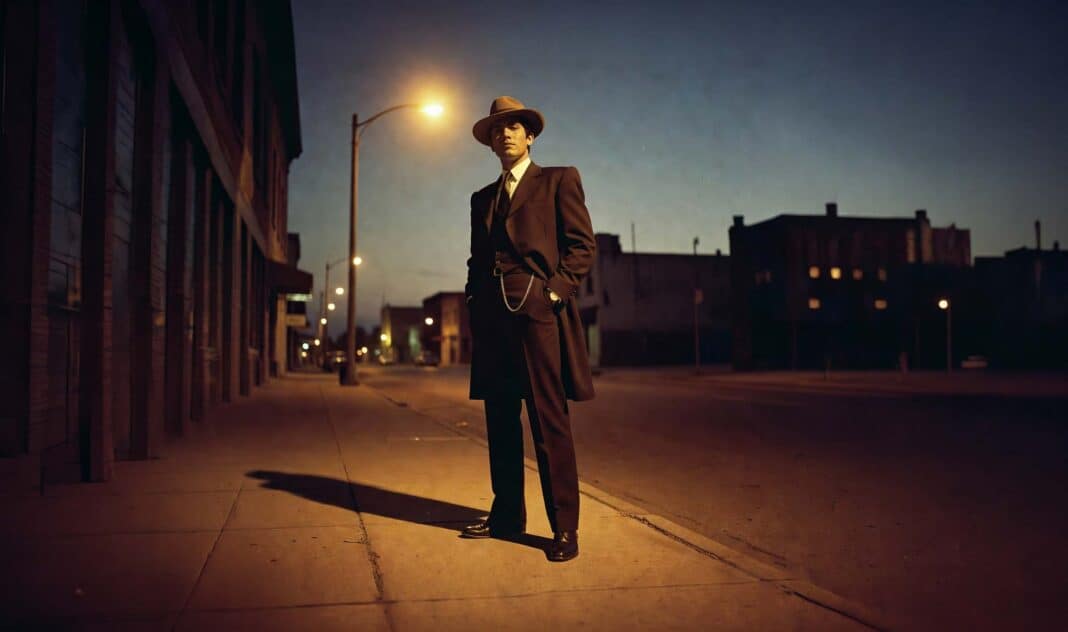
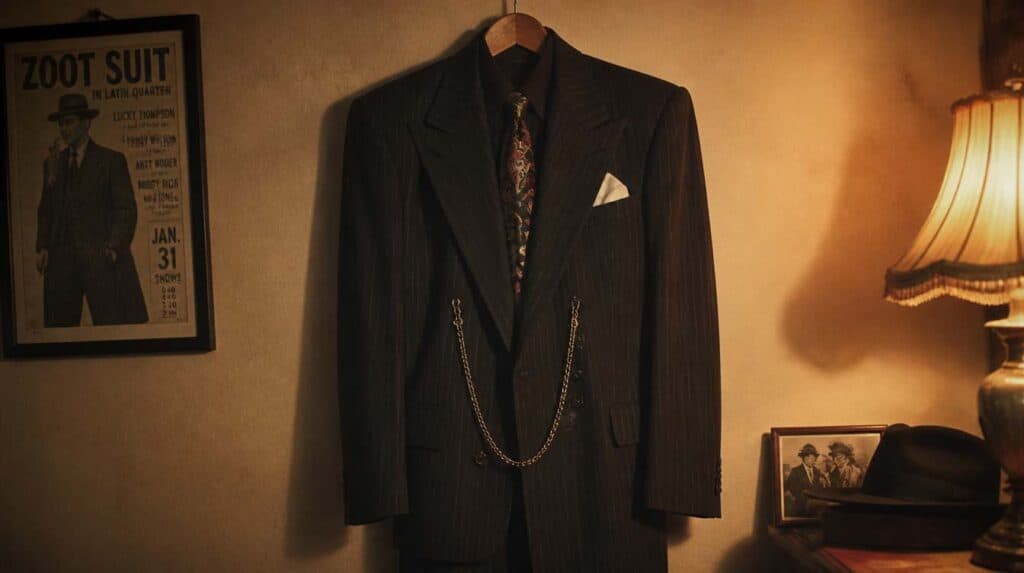
The zoot suit — oversized shoulders, a long draped jacket, high-waisted pegged trousers, and a watch chain swinging to the knee — was a 1940s statement of identity for young Black, Mexican-American, and Filipino men, and it was so defiant that it helped spark days of racial violence in 1943. Almost no other outfit in American history has been treated as an actual threat.
So much fabric it was a statement
The zoot suit’s whole point was excess. Everything was exaggerated — wider, longer, bolder than a respectable man’s suit. For working-class youth who were told to stay small and invisible, wearing too much was the message: taking up space, demanding to be seen, refusing to dress like you were sorry.
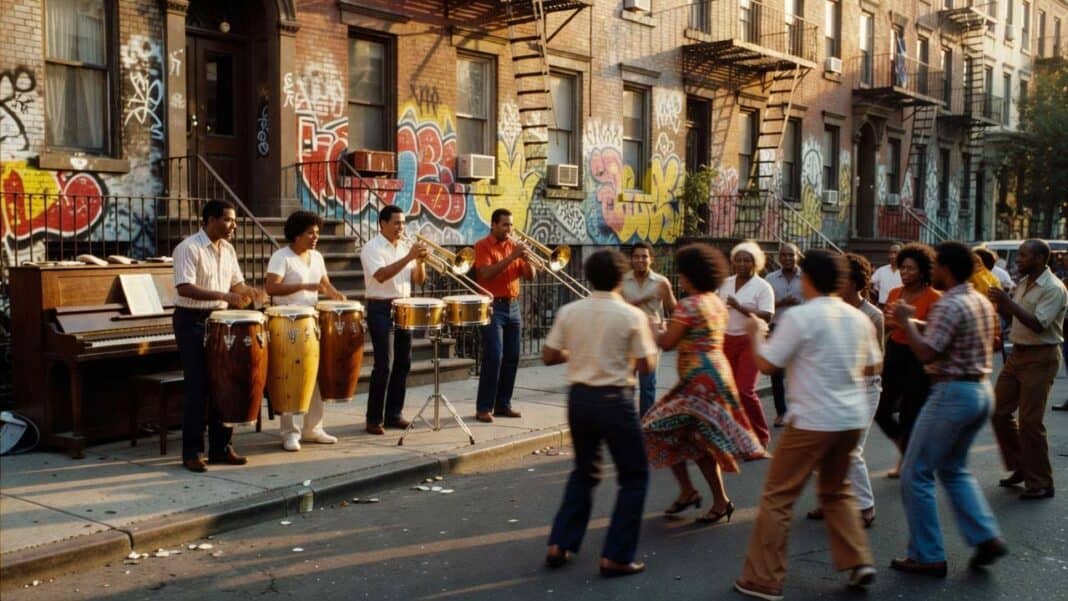
It grew out of 1930s Harlem jazz and swing culture, where Black dancers needed clothes loose enough to move and flashy enough to stand out. From there it spread to Mexican-American pachucos in Los Angeles and El Paso, to Filipino and Italian-American youth — a uniform of cool for kids on the margins.
The pachucos made it Chicano
In the Southwest, the pachucos turned the zoot suit into a whole subculture — with its own slang (Caló), its own walk, its own attitude. For young Mexican-Americans caught between two countries that both treated them as outsiders, the zoot suit was a third option: not Mexican, not “American” in the white sense, but something defiantly their own.
When fabric became “unpatriotic”
Then came World War II and fabric rationing. The War Production Board limited the cloth in men’s suits — and the zoot suit, with its deliberate excess, was suddenly framed as wasteful and unpatriotic. Wearing one became a political act whether you meant it to be or not. The press painted zoot-suiters as delinquents and draft-dodgers, stacking racial panic on top of wartime nerves.
The Zoot Suit Riots
In June 1943, it boiled over. For days in Los Angeles, white U.S. servicemen roamed the streets attacking Mexican-American (and some Black and Filipino) youth, dragging zoot-suiters out of theaters and streetcars, beating them and stripping them of their suits in public. The police largely stood by — and then arrested the victims. The press called it the “Zoot Suit Riots,” as if the clothes had done the rioting.
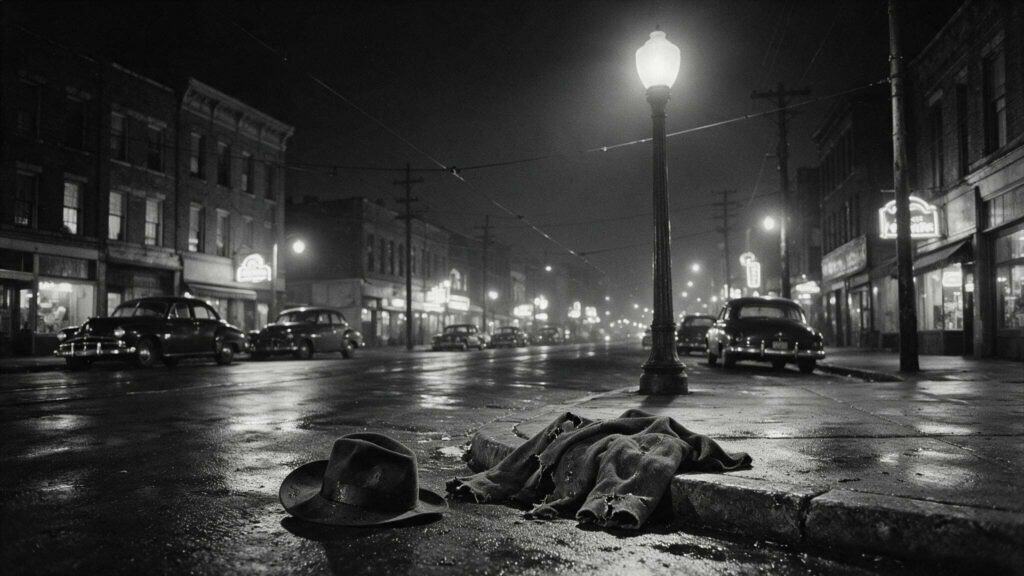
It was one of the most naked displays of racial violence on the wartime home front, and the suit was the excuse.
From target to icon
The zoot suit never lost its charge. It became a lasting symbol of Chicano pride and resistance — immortalized in Luis Valdez’s 1978 play and 1981 film Zoot Suit, and echoed every time a community turns a thing used to shame it into a badge of honor. What was once a reason to be beaten is now a reason to be proud.
Frequently Asked Questions
What is a zoot suit?
A 1940s men’s suit with exaggerated proportions — wide padded shoulders, a long draped jacket, high-waisted pegged trousers, and a long watch chain. It was popular among young Black, Mexican-American, and Filipino men.
Where did the zoot suit come from?
It emerged from 1930s Harlem jazz and swing culture and spread to Mexican-American pachucos in Los Angeles and the Southwest, becoming a marker of identity for working-class youth of color.
What were the Zoot Suit Riots?
A series of violent attacks in Los Angeles in June 1943, when white U.S. servicemen assaulted Mexican-American and other minority youth wearing zoot suits. Police largely arrested the victims rather than the attackers.
Why was the zoot suit considered unpatriotic?
During WWII fabric rationing, the suit’s deliberate excess of cloth was framed as wasteful, and zoot-suiters were stereotyped in the press as delinquents — fueling the racial hostility behind the riots.
What is a pachuco?
A member of the 1940s Mexican-American subculture known for zoot suits, Caló slang, and a distinct style and attitude — a defiant identity for youth who felt rejected by both Mexico and mainstream America.
Sources
- “Zoot Suit Riots,” American Experience, PBS.
- “The Zoot Suit Riots and Wartime Los Angeles”, The National WWII Museum.
Researched and written by Victor Ramirez. Edited and fact-checked by Mia Alejandra Umphrey. Drafting assisted by AI; all facts verified against the sources above before publication. See our editorial standards.
Part of our guide to Latino Style History.