
Frida Kahlo’s signature look — the flowing Tehuana skirts, the floral crown, the bold unibrow — was a deliberate political statement, not a costume. Every element announced Indigenous Mexican pride at a moment when her country was deciding what it wanted to be. She turned getting dressed into a daily act of defiance.
Born in 1907, Frida built a personal style so complete it’s still copied a century later — on runways, at Halloween, on tote bags. But almost no one knows what it actually meant.
The Tehuana dress: dressing like a matriarchy
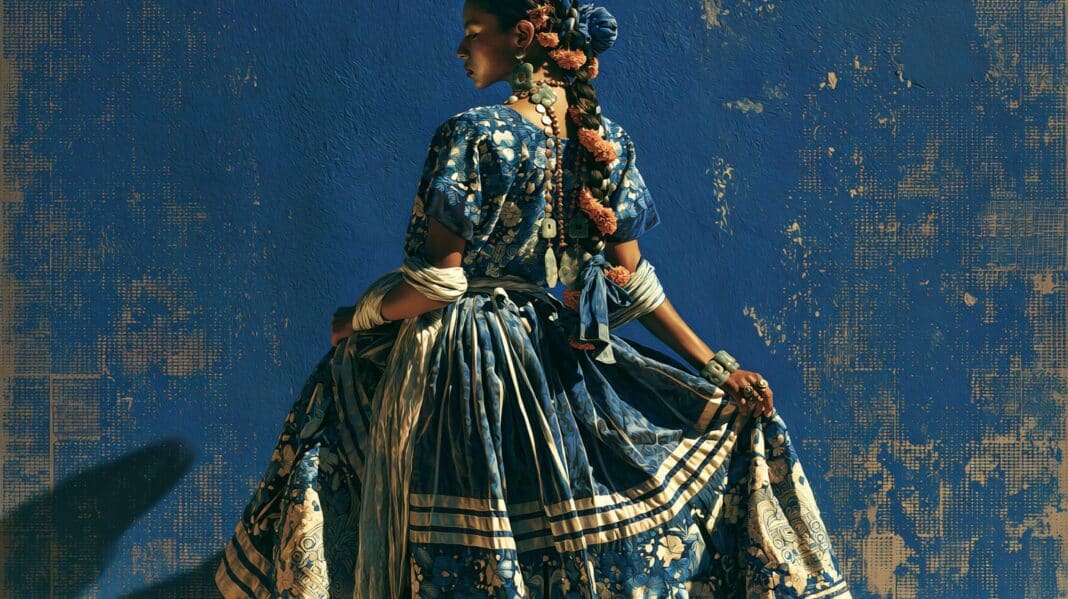
Frida’s flowing skirts and embroidered blouses came from Tehuantepec, a region of Oaxaca famous for its Zapotec matriarchal society — where women ran the markets and held real economic power. By dressing Tehuana, Frida wasn’t picking a pretty outfit; she was aligning herself with one of the few cultures on Earth where women led. The look was feminism stitched in thread.
Mexicanidad: Indigenous over European
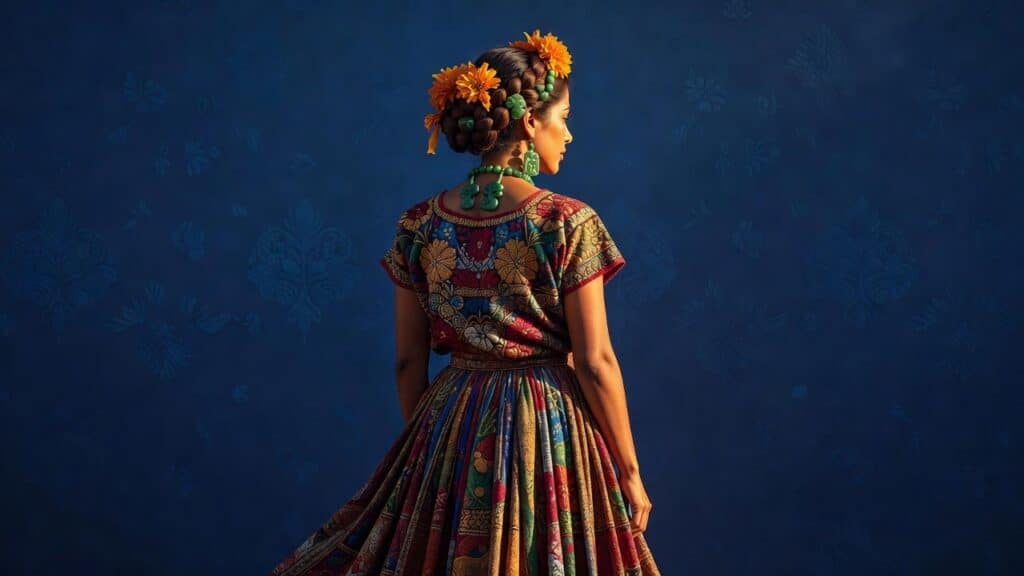
After the Revolution, Mexico was in the middle of Mexicanidad — a national movement to embrace Indigenous and mestizo identity instead of European imitation. Frida married the muralist Diego Rivera in 1929, and both collected Mesoamerican art. Her wardrobe was propaganda for it: pre-Columbian jade jewelry, rebozos, Indigenous textiles — a walking argument that Mexican beauty didn’t need to look European.
The skirts were also armor
There’s a practical layer too. Childhood polio left one leg thinner, and the 1925 bus accident fractured her back and shattered her pelvis. The long, voluminous skirts hid the limp, the leg, and later a prosthetic — turning what she might have hidden in shame into the most glamorous silhouette in the room. Concealment as power.
The unibrow and the mustache
Frida painted her connected brows and faint mustache into her self-portraits, refusing to soften them. In an era when European femininity meant erasing exactly those features, leaving them in was a statement: I will not be made palatable. It’s why she reads as radical even now.
The flowers and braids
The crowns of fresh flowers and the elaborate braided updos came from Indigenous Mexican traditions, especially again from Tehuana styling. They framed her face like a living altar — beauty, fertility, and heritage worn on the head. Pretty, yes. But also a flag.
Why it still matters
Frida’s look endures because it was never just aesthetic — it was a fully built argument about womanhood, nation, disability, and pride, worn on the body every single day. That’s why copying the flower crown without the meaning always feels a little empty. The style was the message.
Frequently Asked Questions
Why did Frida Kahlo dress in Tehuana clothing?
The Tehuana style came from Tehuantepec, Oaxaca — home to a Zapotec matriarchal society. Frida wore it to align with Indigenous Mexican identity and female power, as part of the post-revolution Mexicanidad movement.
Why didn’t Frida Kahlo remove her unibrow and mustache?
She kept and even emphasized them, in life and in her self-portraits, as a deliberate rejection of European beauty standards that pressured women to erase such features.
Were Frida Kahlo’s long skirts just fashion?
No — they doubled as practical cover for the leg affected by polio and a later prosthetic, after her 1925 bus accident. She turned concealment into a signature glamorous silhouette.
What is Mexicanidad?
A post-Revolution Mexican cultural movement embracing Indigenous and mestizo identity over European imitation. Frida and Diego Rivera were among its most visible figures, and her wardrobe expressed it.
When was Frida Kahlo born?
In 1907, in Coyoacán, Mexico.
Kahlo used clothing as argument, which puts her in company. The guayabera carried a similar claim about dignity and labour, the zoot suit made refusal visible enough to provoke violence, and the “clean girl” aesthetic shows what happens when that visual language gets borrowed without its name attached.
Sources
- “Frida Kahlo: Making Her Self Up”, Victoria and Albert Museum, London.
- “Frida Kahlo: Appearances Can Be Deceiving”, Brooklyn Museum.
Researched and written by Victor Ramirez. Edited and fact-checked by Mia Alejandra Umphrey. Drafting assisted by AI; all facts verified against the sources above before publication. See our editorial standards.
Part of our guide to Latino Style History.