
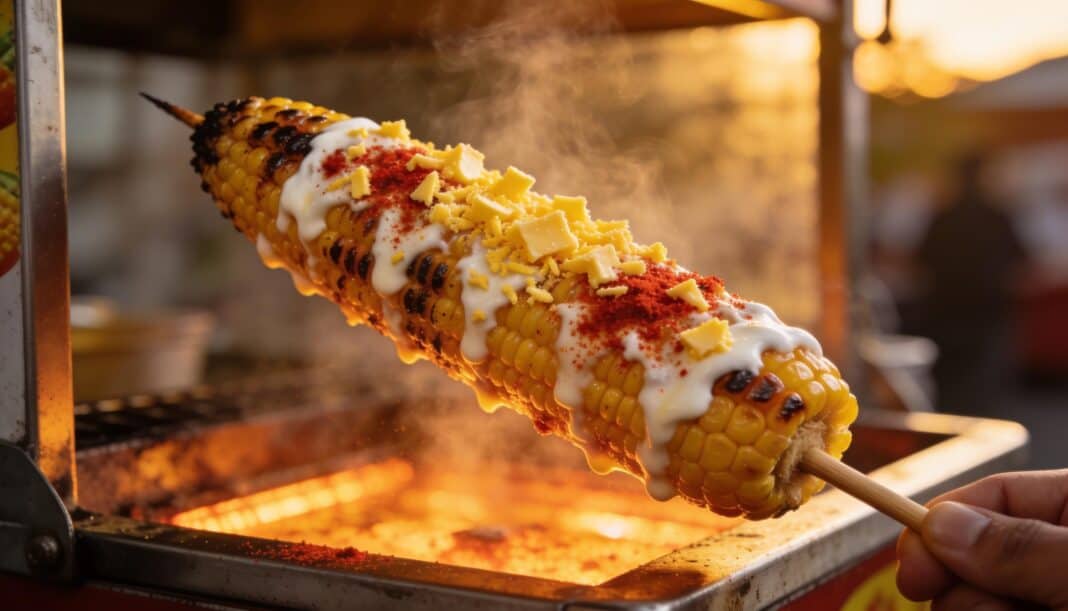
Elote — grilled corn on the cob slathered in mayo, cotija cheese, chili, and lime — is the street-food face of a plant Indigenous farmers in Mexico are generally thought to have domesticated around 9,000 years ago, and once considered sacred. Long before it became a “Mexican street corn” salad on every American menu, corn was the literal substance ancient Mesoamericans believed humans were made of.
That paper boat of elote from the cart outside the fútbol game is carrying more history than almost anything else you’ll eat this week.
From a weed called teosinte
Corn doesn’t exist in the wild. It was invented — slowly, by Indigenous farmers in southern Mexico who, over thousands of years, bred a scrubby grass called teosinte (with tiny, hard kernels) into the plump golden maize we know. It’s one of humanity’s greatest feats of genetic engineering, done entirely by hand and patience. Archaeologists and geneticists generally place the start of that process in the Balsas River valley of southern Mexico around 7000 BCE, though the precise timeline is still being refined as new evidence emerges.
The food humans were made of
To the Maya, corn wasn’t a crop — it was creation itself. The Popol Vuh, the K’iche’ Maya creation story, says the gods made the first humans out of white and yellow corn after failing with mud and wood. The Aztecs honored maize gods like Centeotl and Chicomecóatl. Corn was tribute, currency, calendar, and religion. You weren’t eating corn; you were eating the thing you were made from.
So what is elote, exactly?
Elote is the Náhuatl-derived word for a fresh corn cob. As street food, it’s grilled or boiled corn on a stick, coated in some combination of mayonnaise or crema, cotija cheese, chili powder, lime, and salt. Its cup cousin is esquites — the kernels cut off and served in a cup with the same toppings and a spoon, easier to eat on the move.
The toppings aren’t random either, but they aren’t all ancient. Chili is native to Mesoamerica and was paired with corn long before contact. Cotija and lime both came later — cheese with the Spanish, and citrus from Asia by way of Europe, since limes are not native to the Americas. Elote is the whole timeline in one bite — Indigenous corn, colonial dairy and citrus, modern street hustle.
How it conquered America
Mexican migration carried elote north, and the esquites cart became a fixture wherever Mexican communities settled. Then the internet found it. Suddenly “Mexican street corn” was a flavor profile bolted onto everything — pasta salads, pizza, dips, ramen, even ice cream. The elote itself rarely gets credited; the “street corn salad” trend mostly forgets it has a 9,000-year-old name and a religion attached.
Why the original still wins
You can deconstruct elote into a trendy salad, but the magic is in the ritual: the hot cob, the messy hands, the lime squeezed over chili, eaten standing up on a street corner. That’s not a recipe — it’s a tradition that survived conquest, migration, and rebranding and still tastes like home. Everything else is just borrowing its flavor.
Elote vs esquites
| Elote | Esquites | |
|---|---|---|
| Form | Whole cob, usually on a stick | Kernels cut off, served in a cup |
| How you eat it | With your hands, standing still | With a spoon, while walking |
| Toppings | Mayonnaise or crema, cotija, chilli, lime | The same, stirred through |
| Often served | From a cart or grill | From a pot, sometimes with the cooking liquid |
| Name origin | Náhuatl-derived word for a fresh cob | From izquitl, toasted corn |
Frequently Asked Questions
What is elote?
Elote is Mexican street corn — a grilled or boiled corn cob coated in mayonnaise or crema, cotija cheese, chili powder, lime, and salt. The kernels served off the cob in a cup are called esquites.
Where did elote originate?
In Mexico. Corn (maize) was domesticated by Indigenous Mesoamericans roughly 9,000 years ago from a wild grass called teosinte, and corn was sacred to the Maya and Aztec long before elote became street food.
What’s the difference between elote and esquites?
Elote is served on the cob, usually on a stick. Esquites are the same flavors but with the kernels cut off and served in a cup with a spoon — easier to eat while walking.
What cheese goes on elote?
Cotija, a crumbly, salty aged Mexican cheese. Crema or mayonnaise helps it stick, with chili powder and lime on top.
Why was corn sacred to the Aztecs and Maya?
The Maya creation story, the Popol Vuh, says humans were made from corn. The Aztecs worshipped maize deities like Centeotl. Corn was food, currency, and religion across Mesoamerica.
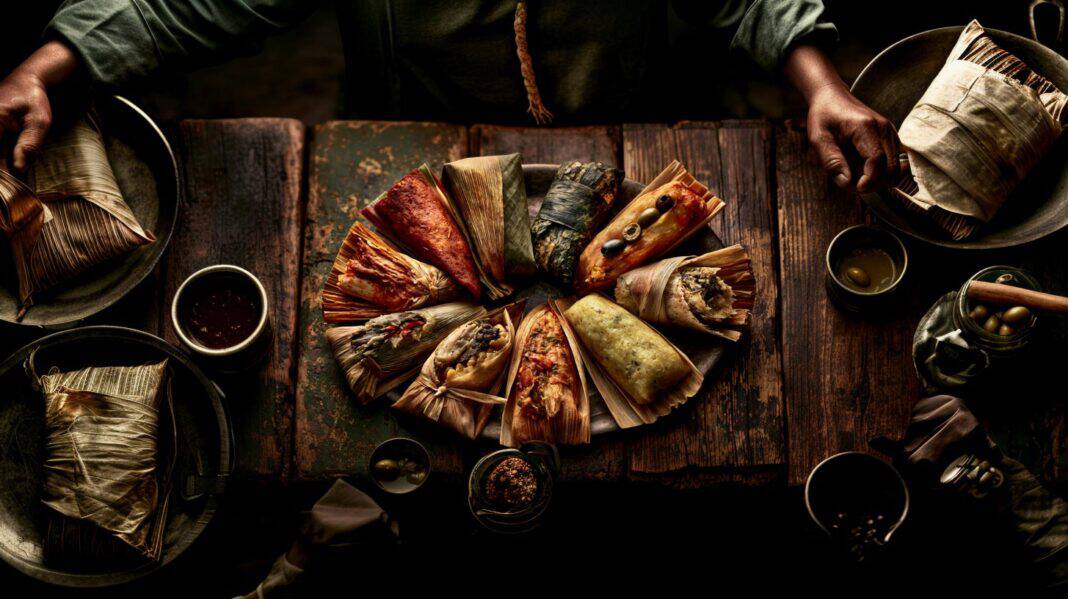
Corn is the through-line of Mexican street food. It is the same maize behind tamales, one of the indigenous foods the world took and renamed, and the cart selling it often sits next to a paletero working the same corner.
Sources
A note on this one. There is no Tier 1 or Tier 2 source — museum, university, archive or established journalism — writing specifically about elote as a street food. What exists is recipe blogs and restaurant marketing, and citing those would fake a rigour this page does not have.
So the claims here are attributed rather than asserted. Maize domestication from teosinte in the Balsas River valley is the settled part, and the page says “generally thought to” and “still being refined” because the precise dating genuinely is. The Popol Vuh creation account and the maize deities are documented Mesoamerican religion. The topping history is stated as sequence, not as a sourced claim.
One correction already made on this page: limes are not native to the Americas. An earlier version described lime and chilli as ancient Mesoamerican partners. Chilli, yes. Citrus arrived after 1492.
Researched and written by Victor Ramirez. Edited and fact-checked by Mia Alejandra Umphrey. Drafting assisted by AI; no Tier 1 or 2 source exists for elote specifically, so claims are attributed rather than cited — see the note above. See our editorial standards.

Part of our guide to Latin Food Origins.