
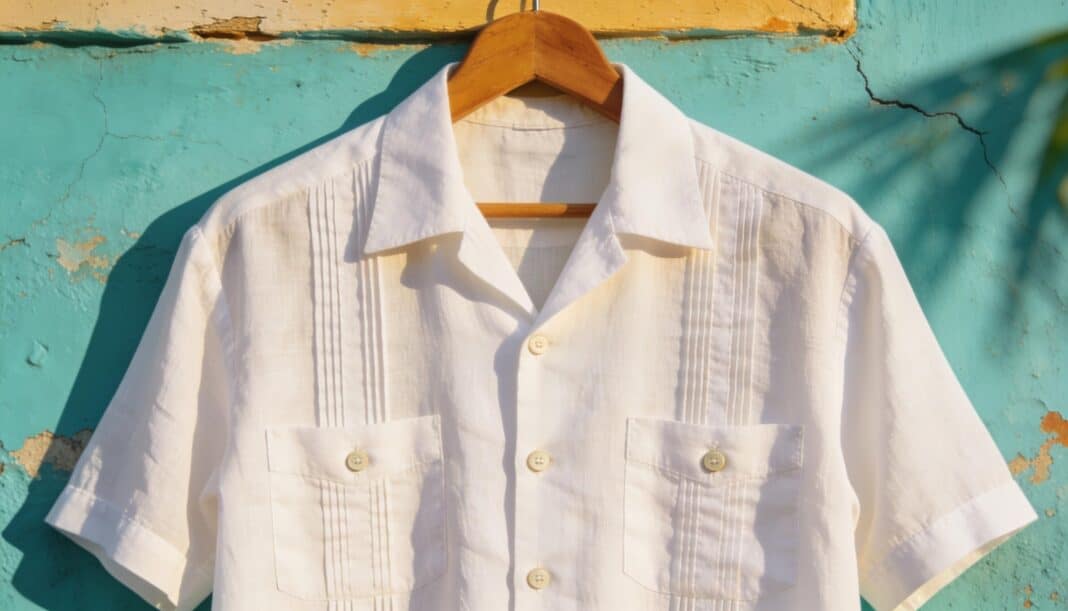
The guayabera — the lightweight, four-pocket, double-pleated shirt — most likely originated in 18th-to-19th-century Cuba and spread across the Caribbean, Mexico, and beyond to become Latin America’s signature formal-casual shirt: cool enough for the tropics, dignified enough for a head of state.
You’ve seen it at weddings, at quinceañeras, on your tío who somehow looks sharper than everyone in a full suit. The guayabera is one of the few garments that reads as celebration and authority at the same time — and it earned that the long way.
The guava-pocket legend
The most-told origin story is also the most charming: a poor Cuban farmer asked his wife to sew large patch pockets onto his shirt so he could carry guavas — guayabas — home from the field. Hence guayabera. Historians can’t verify it, and a competing theory links the name to the Yayabo River near Sancti Spíritus, Cuba, where the shirt is often said to have been born. Either way, the trail leads back to rural Cuba.
Cuba vs. Mexico: who claims it
Cuba has the strongest historical claim, but Mexico — specifically the Yucatán — adopted the guayabera so completely that many assume it’s Mexican. The truth is the shirt spread through the whole Caribbean basin and got reinvented everywhere it landed, which is exactly why so many cultures feel ownership of it. It’s less “stolen” than shared.
Why four pockets and those pleats
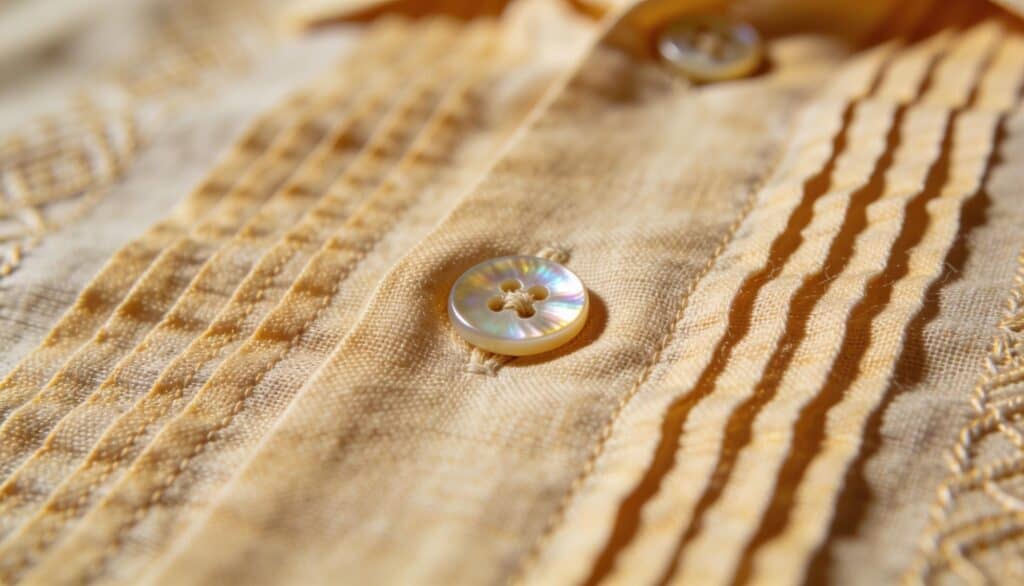
The design isn’t random. The two rows of fine vertical pleats (alforzas) running down the front and back aren’t just decoration — they let the fabric breathe and drape loosely off the body, essential in tropical heat. The four large pockets were practical storage for working men: cigars, documents, tools, yes, even guavas. Function first; the elegance came later.
From farmworker to head of state
By the 20th century the guayabera had climbed every rung of the social ladder. It became standard formal wear across Cuba, the Dominican Republic, Mexico, and the Philippines, worn by writers like Gabriel García Márquez and by presidents at summits. In several countries it’s accepted as full formal dress — the tropical answer to the suit and tie, no jacket required. A garment that started on a farmer’s back ended up at diplomatic tables.
The comeback
Today the guayabera is having a moment again — on runways, at destination weddings, and as a deliberate marker of Latino pride. Wearing one isn’t just dressing for the heat; it’s wearing two centuries of Caribbean history that refused to choose between comfort and dignity.
Frequently Asked Questions
Where did the guayabera originate?
Most evidence points to Cuba, likely the Sancti Spíritus region near the Yayabo River, in the 18th-to-19th century. It then spread across the Caribbean, Mexico, and beyond.
Why is it called a guayabera?
The popular story says a Cuban farmer added big pockets to carry guavas (guayabas) — giving the shirt its name. A competing theory ties the name to the Yayabo River in Cuba.
What are the pleats on a guayabera for?
The fine vertical pleats (alforzas) help the loose fabric breathe and hang away from the body — a practical design for tropical heat that also became the shirt’s signature look.
Is the guayabera Cuban or Mexican?
Historically Cuban, but Mexico (especially the Yucatán) embraced it so fully that it’s now claimed by both. It’s a shared Caribbean-and-Mexican garment.
When do you wear a guayabera?
Everywhere from casual to formal. In much of the Caribbean and Mexico it’s accepted as formal wear — appropriate for weddings, quinceañeras, and even official events without a jacket.
Clothing has done a lot of political work in Latino history. The guayabera turned a labourer’s shirt into formalwear; the zoot suit turned excess fabric into a statement worth rioting over; and Frida Kahlo’s Tehuana dress turned Indigenous Mexican dress into a self-portrait.
Sources
- “The Guayabera: A Shirt’s Story”, HistoryMiami Museum — the first exhibition to trace the shirt through Cuba, Mexico and the United States.
Researched and written by Victor Ramirez. Edited and fact-checked by Mia Alejandra Umphrey. Drafting assisted by AI; all facts verified against the sources above before publication. See our editorial standards.

Part of our guide to Latino Style History.