
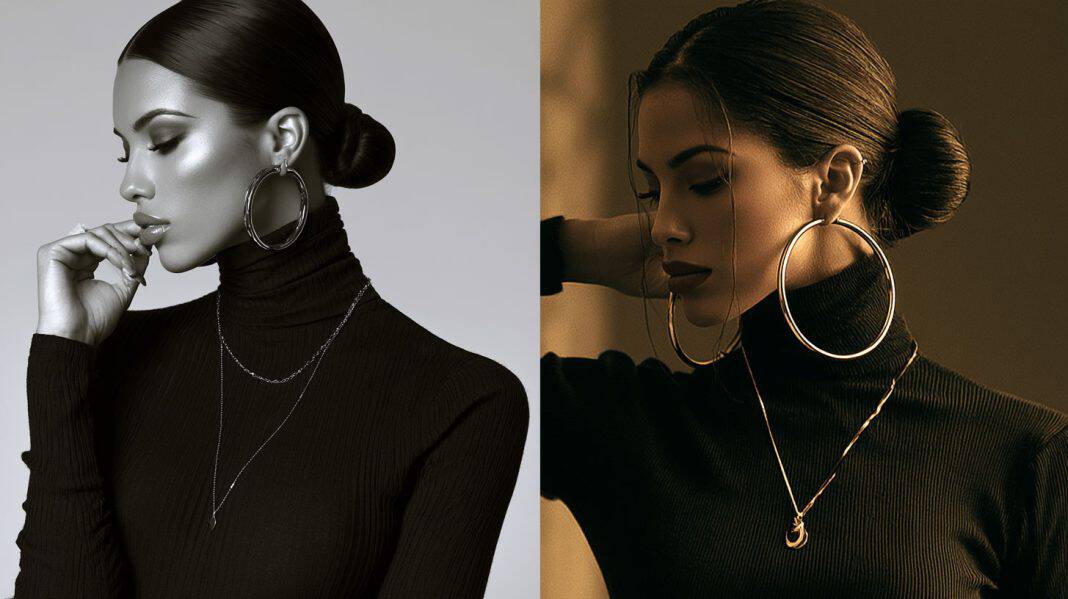
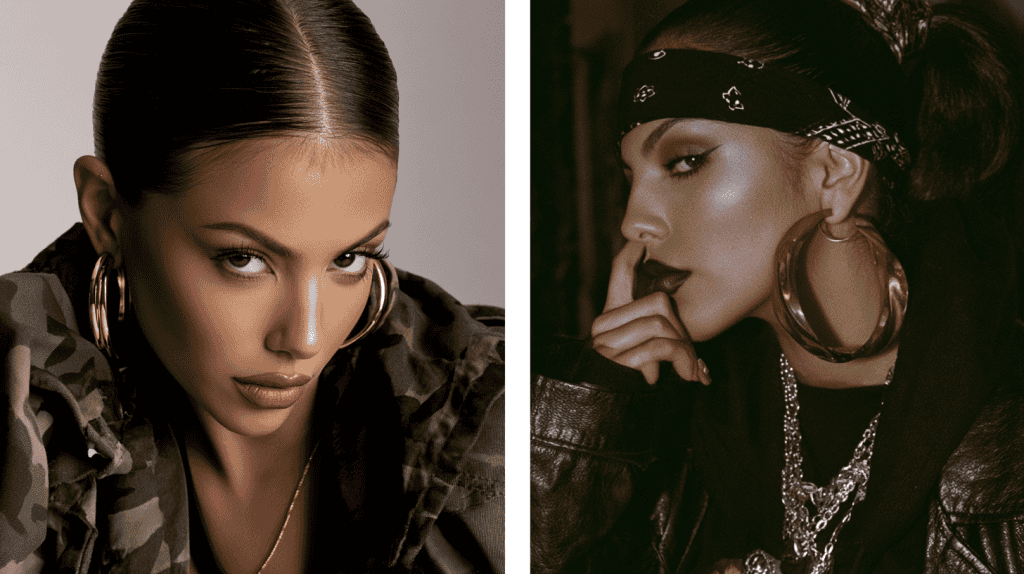
The clean girl aesthetic took over TikTok and Instagram around 2022: slicked-back bun, small gold hoops, brown lip liner with a glossy nude lip, laminated brows, dewy skin, a delicate nameplate necklace. Effortless, polished, “expensive.”
Around 2022, a look took over TikTok and Instagram and got a name: the “clean girl” aesthetic. Slicked-back bun, not a hair out of place. Small gold hoops. Brown lip liner with a glossy nude lip. Laminated brows, dewy skin, gold jewelry, a delicate nameplate necklace. Effortless, polished, “expensive.”
Here’s the thing every Chicana watching already knew: that’s not new. That’s the way girls in East LA, the Bronx, and Latino and Black neighborhoods across the country have been doing their hair and makeup since the 1990s. The “clean girl” look didn’t get invented in 2022. It got renamed. This is the lineage.
The bun and the baby hairs
The sleek, gelled-back bun with laid edges is one of the oldest signatures in Black and Brown beauty. Baby hairs swooped with a toothbrush and a tin of gel, slicked so tight it could pull a headache — that was a Tuesday-morning ritual for generations of Latina and Black girls long before it was a runway “trend.” When it shows up now under soft lighting with a $40 hair gel, it’s the same technique with a new price tag
Brown lip liner and the lip
Dark or brown lip liner with a lighter lip — nude, glossy, or just balm — is pure 90s Chicana. Walk through any quinceañera photo album from 1996 and there it is on every girl in the picture. Brands now sell “the perfect ’90s brown liner” as a rediscovery. For a lot of women, it never left the makeup bag.
The hoops and the nameplate
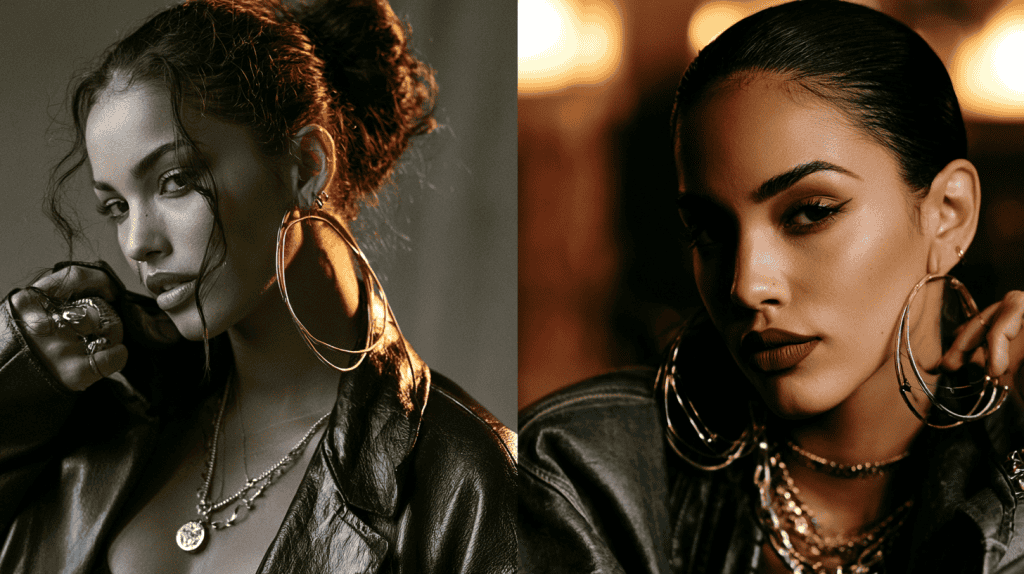
Gold hoops aren’t an accessory in this culture — they’re a uniform, passed down, worn from childhood. So is the nameplate necklace: your name in cursive gold, the way Aaliyah, the way the girls on the block, the way Sex and the City later borrowed from Black and Latina New York all wore it. When a fashion magazine calls the nameplate “the it-girl jewelry of the season,” it’s describing something that was already a rite of passage in these neighborhoods decades ago.
Where it really starts: the pachucas and cholas
This look has roots that go back further than the 90s. In the 1940s, pachucas — the women of the zoot-suit era — wore dramatic arched brows, dark lips, and pompadours, claiming style as defiance at a time when society wanted them invisible. The chola aesthetic that followed in the 70s, 80s, and 90s built on it: thin sculpted brows, lined lips, slicked hair, gold jewelry, an attitude that said I put myself together with precision and I dare you to say something.
That precision is the whole point. This was never sloppy or “low-effort.” It was a discipline — a way of looking sharp and untouchable in neighborhoods that didn’t hand you much else. The same look that got girls dress-coded, called “ghetto,” or followed around stores is now photographed in soft focus and called “clean,” “quiet luxury,” “effortless.”
Why the “clean girl aesthetic” rename stings
It’s worth being honest about the friction. There’s something frustrating about watching a look your mom and tías got judged for become “elevated” the moment it’s worn by someone the industry already approves of, often with zero mention of where it came from. The women who built it rarely get the credit or the brand deals.
But there’s another way to hold it, too: the look won. It was so right, so timeless, so clean in the truest sense that the mainstream eventually had no choice but to adopt it. East LA was simply early. The job now isn’t to gatekeep it — it’s to keep the name attached to the lineage. Wear the bun, the hoops, the liner, the nameplate. Just know you’re wearing an inheritance, and say so.
How to honor the originators
- Credit it. When you do the look, name where it comes from — Chicana, chola, Black and Brown beauty culture.
- Support the people who built it: Latina- and Black-owned beauty brands, neighborhood salons, the artists documenting this history.
- Pass the story down with the technique. The slicked bun is easy to teach. The lineage is the part that gets lost.
The “clean girl” look is genuinely beautiful. It’s also genuinely old, and genuinely ours. Both things are true — and the women who walked it first deserve to be in the photo.
Frequently Asked Questions
What is the clean girl aesthetic?
A beauty trend built on slicked-back hair, gold hoops, brown lip liner, nameplate jewellery and minimal “no-makeup” makeup — presented as effortless and new.
Where did the clean girl aesthetic come from?
Its components are Chicana and Black beauty traditions. Slicked buns with baby hairs, brown lip liner, large hoops and nameplate necklaces were worn by cholas and by Black and Latina women for decades before the label existed.
What is a chola?
A Mexican American woman of the barrio subculture that took shape in the Southwest from the 1960s and 70s, with a distinct and instantly recognisable style. It descends from the pachucas of the 1940s.
Who were the pachucas?
The women of 1940s pachuco culture in Los Angeles. The Smithsonian’s National Museum of the American Latino describes their fashion as standing “in defiance of Mexican gender norms, second-class citizenship, and white middle-class ideas of American womanhood.”
Why is the rebrand criticised?
Because the same looks were treated as evidence of being ghetto or unprofessional when Latina and Black women wore them, and as chic minimalism once they were renamed. The style was accepted; the originators were not.
Sources
- “Pachucas: How Fashion Asserts Identity” National Museum of the American Latino, Smithsonian — curator Verónica A. Méndez, who describes pachuca fashion as standing “in defiance of Mexican gender norms, second-class citizenship, and white middle-class ideas of American womanhood.”
- “Chicana Fashion, 1940s to the Present: A Search for Independence and Solidarity Through Fashion” Exeter College, University of Oxford.
- “Uncovering a Cultural History of the Nameplate Necklace” Vice.
Researched and written by Victor Ramirez. Edited and fact-checked by Mia Alejandra Umphrey. Drafting assisted by AI; three Wikipedia citations were removed and replaced with the Smithsonian’s National Museum of the American Latino and an Oxford academic paper. See our editorial standards.
Part of our guide to Latino Style History.