

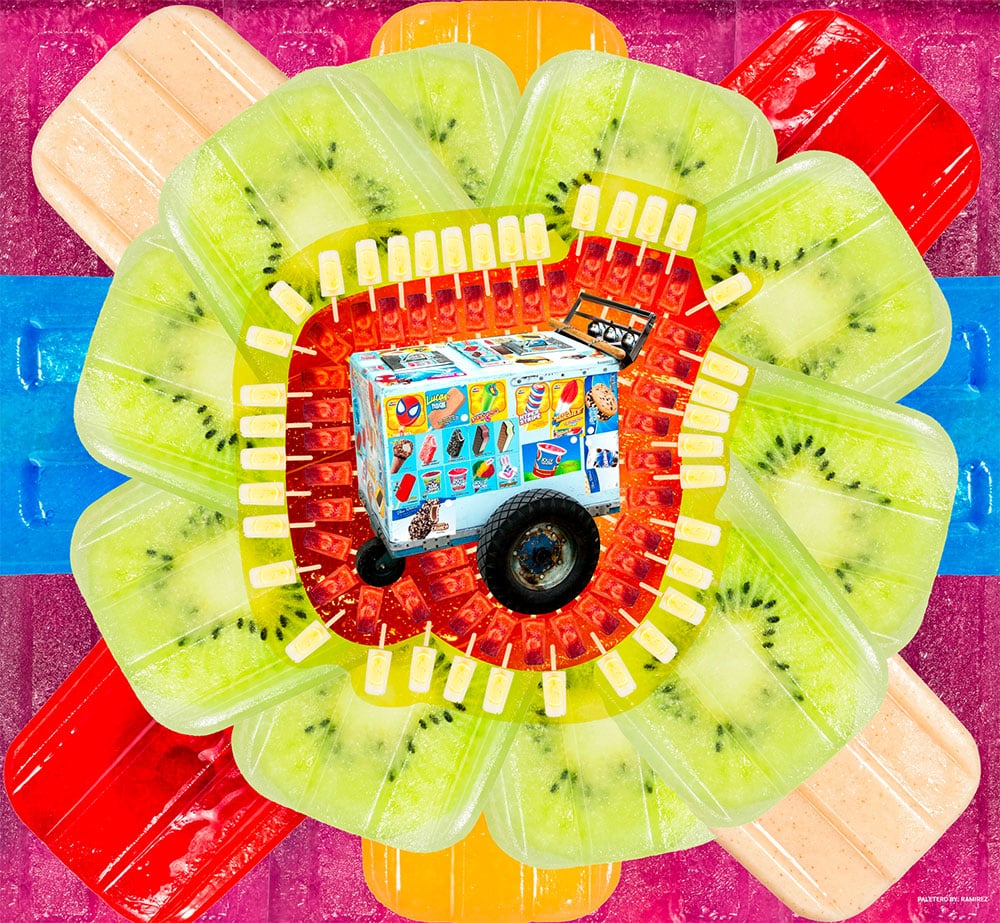
A paletero is a street vendor who sells paletas — Mexican ice pops — from a pushcart, usually announced by the ring of a hand bell. The trade took shape in Mexico in the early 1900s and travelled north with Mexican migration. Today paleteros are a fixture of summer in Mexican-American neighbourhoods across the United States.
Paletero culture has its roots in Mexico, where it is believed to have originated in the early 1900s. In Mexico, Paletero culture is a symbol of pride and hard work. Paletero vendors would go from neighborhood to neighborhood selling a variety of icy treats such as ice cream, popsicles, paletas, and raspados. Paleteros were a familiar sight in Mexico and were often seen pushing their carts filled with ice-cold treats down the streets.
In the United States, Paletero culture is most visible in Mexican-American communities. In most cities, Paleteros can be seen operating their carts in neighborhoods and parks during the summer months. In San Diego, Paleteros can be seen in Chicano Park, where they are a familiar sight.
Popsicle vs paleta vs raspado
Popsicles and paletas are two of the most popular icy treats that Paleteros sell. American popsicles are usually made from flavoured syrup or juice. Paletas come in two families: paletas de agua, water-based and built around fresh fruit, and paletas de leche, made with milk or cream. The water-based fruit paletas — lime, tamarind, watermelon — are the ones most associated with the carts, and the fresh fruit is what sets them apart from a supermarket ice pop. Raspados are a type of icy treat made with shaved ice and flavored with fruit syrups.
Paletero has become mainstream and can be seen in various areas, such as Chicano Park in San Diego.
The popularity of Paletero culture has grown significantly in recent years. Paleteros are no longer just seen in Mexican-American communities, but in many other areas as well. Paleteros can now be found in parks, festivals, and other public events. The popularity of Paletero culture has also grown significantly through social media and other forms of media. As a result, Paletero culture has become more accessible to people from all backgrounds.
Paleteros and hate crimes
Unfortunately, Paleteros have also been the target of hate crimes in some areas. In recent years, Paleteros have been the target of hate speech, vandalism, and even physical assaults in some areas. These hate crimes have been largely attributed to racism and xenophobia. In response, many Paleteros have taken to social media and other forms of media to raise awareness of the hate crimes and to call for justice.
A culture built on hard work
Paletero culture is a proud culture and it is filled with hard-working individuals. Paleteros are often seen pushing their carts filled with ice-cold treats in the heat of the summer. Most Paleteros work long hours, often starting early in the morning and working late into the evening. Although their jobs may be difficult, Paleteros remain proud of their culture and continue to serve their communities with their icy treats.
Paleteros in pop culture
Paletero culture has had a profound impact on popular culture. In recent years, Paleteros have been featured in movies, television shows, music, and even video games. These depictions have helped to bring visibility to Paletero culture and to raise awareness of the struggles and triumphs experienced by Paleteros.
The history of the paletero
The history of Paletero culture is a long and proud one. Paleteros have been selling icy treats in Mexico and the United States for over a century. The tradition of Paletero culture has been passed down through generations of Paleteros and it is a symbol of pride for many. Paleteros are often seen as pillars of their communities, providing a service that is both necessary and appreciated.
The photograph that raised $380,000
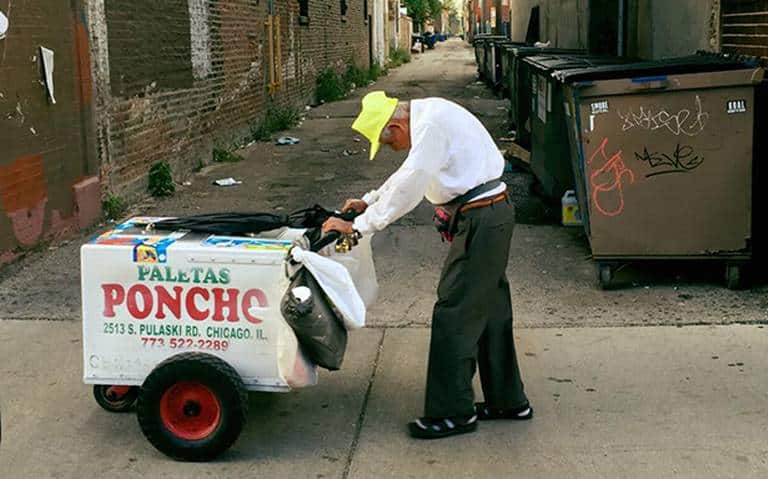
In September 2016, Chicago photographer Joel Cervantes Macias was driving through Little Village when he saw an elderly man pushing a paleta cart. He stopped, bought twenty paletas, and took a photograph. The man was Fidencio Sánchez, then 89, who had returned to work after his daughter died and his wife fell ill.
Cervantes Macias posted the picture and, with his friend Joe Loera, started a GoFundMe with a $3,000 goal. It went viral within days and ultimately raised more than $380,000 from donors around the world — enough for Sánchez to stop pushing the cart. He died on 6 November 2019, as Remezcla reported.
The photograph is the single most recognised image of a paletero ever taken, and it works because of what it shows: an old man doing hard physical work in the heat because he had to. That is the part of the job the bright cart and the bell tend to hide.
Why paleteros matter
Paletero culture is a proud and vibrant culture that has been around for more than a century. Paletero culture has had a profound impact on popular culture and can be seen in various forms, such as movies, television shows, music, and art. Unfortunately, Paleteros have also been the target of hate crimes in some areas. In response, many Paleteros have taken to social media and other forms of media to raise awareness of the hate crimes and to call for justice. Despite the challenges, Paletero culture remains a proud and vibrant culture that continues to serve its communities with icy treats.
Frequently Asked Questions
What is a paletero?
A paletero is a street vendor who sells paletas — Mexican ice pops — from a pushcart, usually signalled by a hand bell. Many also sell raspados (shaved ice) and other frozen treats.
What does paletero mean in English?
Paletero translates roughly as “ice-pop seller” or “popsicle vendor.” It comes from paleta, the Spanish word for the ice pop itself.
What is a paleta?
A Mexican ice pop. There are two main kinds: paletas de agua, water-based and made with fresh fruit, and paletas de leche, made with milk or cream.
What is the difference between a paleta and a popsicle?
Paletas are typically made with real fruit, often with visible chunks of it, while most American popsicles are made from flavoured syrup or juice concentrate.
Where did paleteros come from?
The trade took shape in Mexico in the early 1900s and spread into the United States with Mexican migration, becoming a familiar part of summer in Mexican-American neighbourhoods.
Sources
- NBC News, “Good Samaritan Raises Thousands for 89-Yr-Old Paletas Vendor.”
- Remezcla, “Don Fidencio, Chicago’s Beloved Paletero, Has Died.”
- Milwaukee Magazine, “A Day in the Life of a Milwaukee Paletero.”
- Mission Local, “Paletera Keeps Streets Cool and Icy.”
Researched and written by Victor Ramirez. Edited and fact-checked by Mia Alejandra Umphrey. Drafting assisted by AI; all facts verified against the sources above before publication. See our editorial standards.
Correction, 26 July 2026. An earlier version stated that 1.5 million paleteros operate in the United States, and referred twice to an annual Paletero Festival in San Diego. Neither could be traced to any source — on the first, this article was itself the internet’s top result. Both were removed, along with a mistaken definition of paletas as a cream-based ice cream, which describes only paletas de leche. All corrections.

Part of our guide to Latin Food Origins.