
Open TikTok on any given Sunday and you’ll find a 22-year-old in a linen set telling you to crack a raw egg into a glass of water, sweep it over your body, and watch your energy “release.” She’ll call it a spiritual hygiene reset. The comments will explode with people asking where to buy the “ritual kit.” The product she’ll link to costs sixty-two dollars.
Your abuela rituals has been doing this for free since 1962. She calls it a limpia.
The wellness industry is having a Latin American moment, and the catch is that most of what’s being sold as new and spiritual is genuinely ancient — Indigenous, Afro-Caribbean, and curandera tradition that survived colonization, migration, and several generations of being told it was brujería. Now that it’s profitable, it’s “wellness.” Let’s actually name what’s being borrowed.
Limpia de huevo — the egg cleansing
You take a raw egg, sometimes blessed, sometimes plain. You sweep it down the body of the person being cleansed, head to feet, focusing on heavy areas — head, chest, stomach, joints. Then you crack the egg into a glass of water and read what comes out. Strings, cloudiness, blood spots — each one means something different to the curandera doing the read.
Mexican, Central American, Caribbean and Andean traditions all do versions of this. Origins are pre-Columbian on the Indigenous side, syncretized with Catholic prayer after colonization. TikTok rediscovered it around 2022. The “egg cleanse kits” being sold online are exactly the limpia — minus the abuela who would actually tell you what the egg means.
Mal de ojo — the evil eye
A baby gets fussy, a person admires the baby, the baby suddenly has a fever no doctor can find. Latinas know exactly what happened. Le hicieron ojo.
The protection: a red string with a charm, an azabache (a black coral or jet bracelet), and someone older blowing on the baby’s forehead while reciting a prayer. The diagnosis: a curandera passes a raw egg over the child and reads the water.
The “evil eye” symbol is now sold as a $200 charm necklace at every boutique. It’s an evergreen status piece. Latinas have been pinning the same charm to baby blankets and stroller straps since before Etsy existed.
Agua de Florida — the cologne that isn’t from Florida
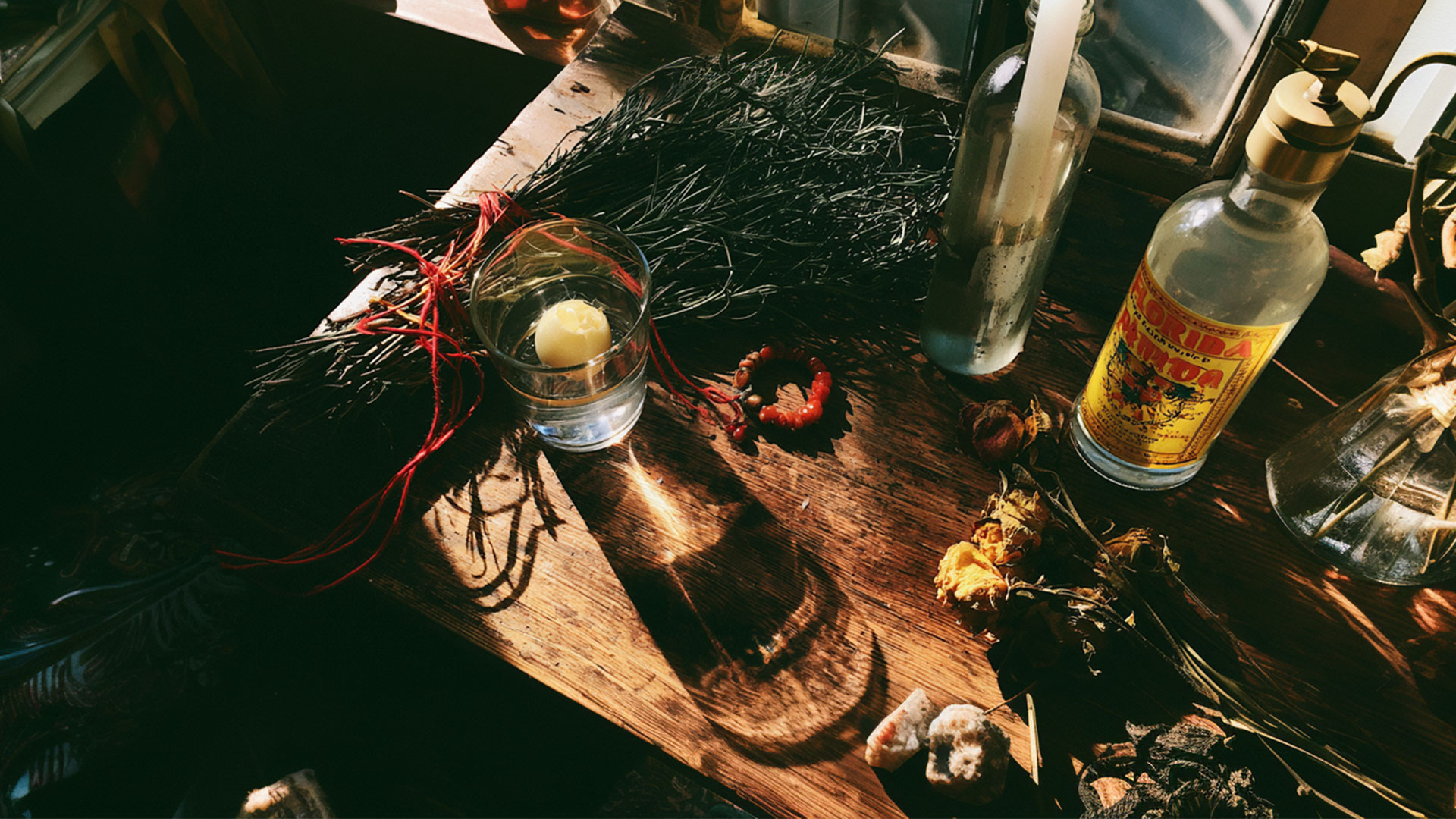
This is the secret weapon. Agua de Florida is a citrus-floral cologne created in 1808 in New York and adopted as a spiritual cleansing tool by Caribbean and Latin American curanderos in the 19th century. You spray it on yourself, your altar, the corners of your room, your front door. It shifts the energy of a space.
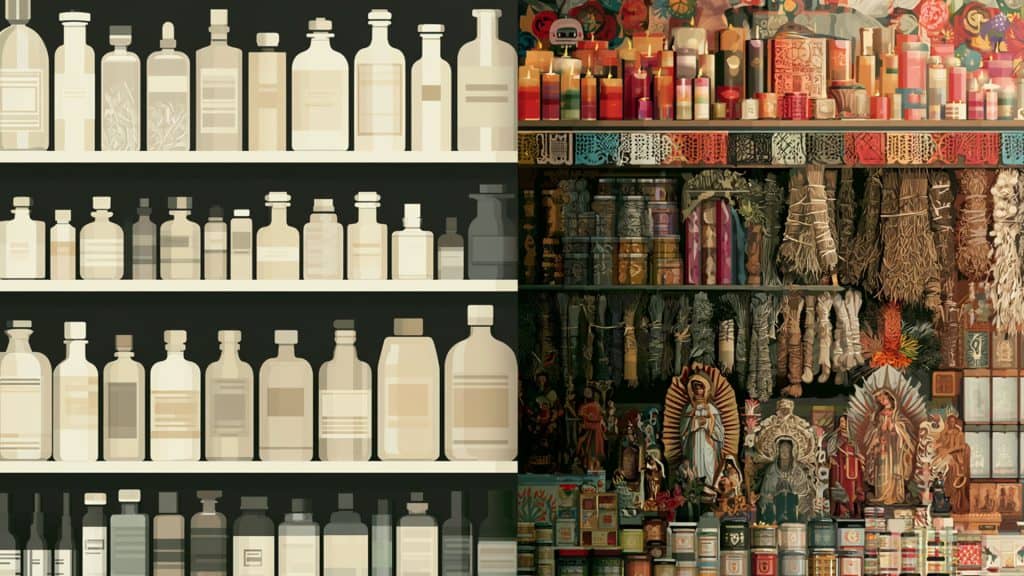
It now sells out at $4.99 per bottle in every botánica. Meanwhile, $58 “energy clearing mists” with similar citrus-floral notes are flying off Goop, Anthropologie, and small-brand websites. Same product. Different packaging. A 1,200% markup.
Ruda, romero, manzanilla — the herbal medicine cabinet
Ruda (rue) for protection — hung over the door, planted at the entrance of the home. Romero (rosemary) for hair growth, mental clarity, and warding off bad energy. Manzanilla (chamomile) for digestion, menstrual pain, fussy babies, sore eyes, and anything else that ails you. Albahaca (basil) for cleansing baths.
These are now packaged as “ritual herb bundles” or “smudge alternatives” at $24 each. They are also $1.50 at the corner botánica or growing in your tía’s planter.
Cascarilla and rose water
Cascarilla — eggshell powder, often blessed — is used in Afro-Caribbean spiritual practice for protection, drawn as a cross on the forehead or carried in a small pouch. It’s a tradition rooted in West African and Yoruba practices that survived enslavement and reemerged in Cuba, Puerto Rico, the Dominican Republic, Brazil and across the diaspora.
Agua de rosas (rose water) is the abuela facial toner, breath freshener, holy water substitute and skin healer all in one. Long before Korean skincare made face mists a cultural moment, every Latina household had rose water in the bathroom.
What’s being lost in the rebrand
When TikTok wellness sellers package these traditions as products, three things disappear:
The lineage. A limpia isn’t a kit. It’s something passed from one woman to another, often within a family. Stripping the practice from the practitioner empties it.
The diagnosis. Half of curandería is the read. The egg, the herbs, the prayer — they’re tools. The skill is the woman who interprets them. You can’t bottle that.
The community. Abuelas didn’t charge $62. They charged a tamal, a favor, a phone call to check in. Money was rarely the point. Care was.
How to engage with this honestly
Buy from Latina-owned botánicas. Learn the practice from someone in your family or community before buying it as a product. If you’re not Latina, sit with the difference between appreciation and appropriation — and remember that someone’s grandmother was burned at the stake or beaten by a priest for doing exactly what now sells out at Sephora.
The wellness industrial complex is going to keep mining Latin America for the next “discovery.” We can at least make sure the credit lands where it belongs — with the women who never stopped.
Sources
A note on this one. Curanderismo and limpias are living folk practice, transmitted in families rather than written down, and no Tier 1 or Tier 2 source documents the specific rituals described here. The Wikipedia links this page used to carry pointed at Florida Water, rue and rose water as substances — they never supported the claims about how the practices are used, so they have been removed rather than swapped.
What is on the page is presented as lived practice, not medical or historical fact. Nothing here is a health claim, and none of it is offered as treatment.
Researched and written by Victor Ramirez. Edited and fact-checked by Mia Alejandra Umphrey. Drafting assisted by AI; three Wikipedia citations were removed; they described ingredients rather than supporting the article’s claims. A heading also read “Your abuela rituals has been doing this,” a grammatical break caused by keyword insertion, and has been fixed. See our editorial standards.
Part of our guide to Latino Style History.