
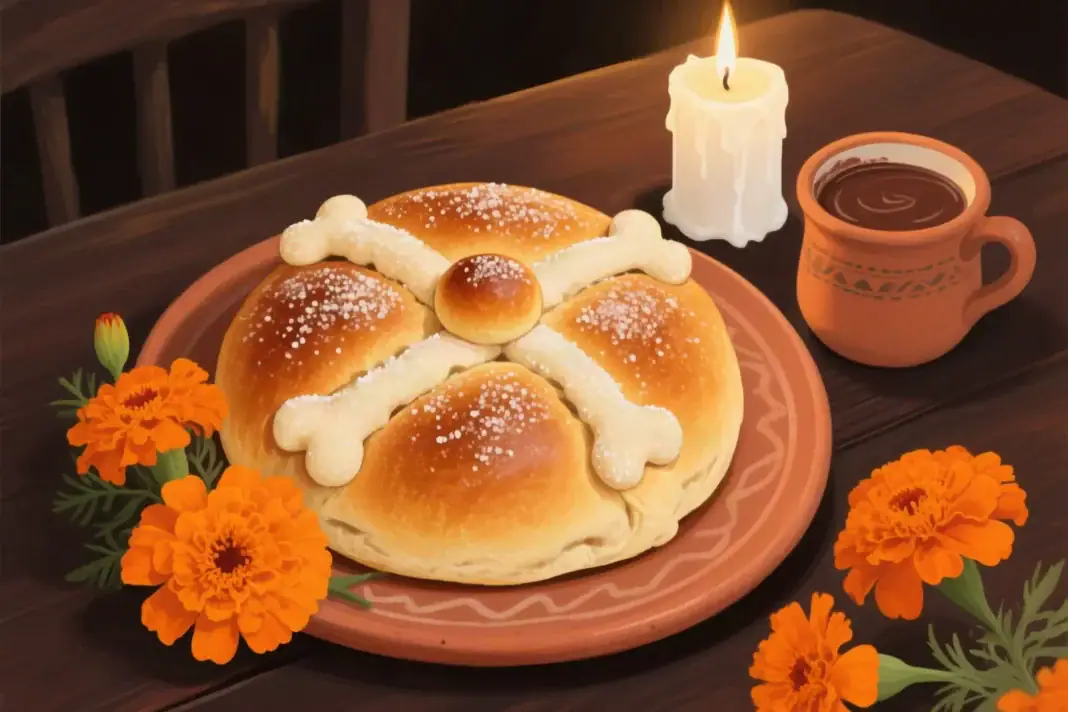
The short version: Pan de muerto is a soft, sweet bread flavored with orange blossom or anise and topped with dough “bones” and a round knob for the skull. It sits on the ofrenda for the dead and gets eaten by the living. The bones stand for the person who died, the circle for the cycle of life. Its most likely ancestor is Spain’s pan de ánimas, “soul bread,” baked for All Souls’ Day, mixed with older Mesoamerican offerings. The popular story that it began as a stand-in for a sacrificed human heart is a legend, not history.
Pan de muerto meaning comes down to this: it’s a loaf shaped like the dead, baked to feed the dead, and eaten by the living once the dead have had their share. From mid-October every panadería in Mexico, and plenty in Los Angeles, Chicago and Toronto, stacks them by the door. Here’s what the shape means, where the bread actually comes from, and the story about it you should stop repeating.
What does pan de muerto represent?
Look at the top of the loaf. Most of the meaning is right there.
- The bones (huesos or canillas). The strips of dough that cross over the top are bones. They represent the person who died. There are often four, which many bakers say point to the four directions.
- The skull. The small ball in the center is the head, the cráneo.
- The circle. The round loaf and the way the bones loop around it stand for the cycle of life and death. Some people read the dome as a grave mound with the bones rising out of it.
- The tears. Some bakers add small drop shapes between the bones, lágrimas. One reading says they’re the tears of Chīmalmā, a Mexica goddess, for the living.
Then the flavor: orange blossom water or orange zest, sometimes anise, butter, and a coat of sugar on top. In much of central Mexico the sugar is white. In Puebla and in a lot of diaspora bakeries it’s dyed bright pink.
Why is it on the ofrenda?
Because you’re feeding guests. The ofrenda is a welcome table for the souls who come back on November 1 and 2, and pan de muerto is one of the 12 traditional items, set out next to the water, the salt and the food the person loved. The belief is that the dead take the essence of what’s offered. The bread itself stays.
Then the family eats it, often at the cemetery or around the altar, usually with hot chocolate or café de olla. It’s not a sad food. It’s the dessert at a reunion.
Where does pan de muerto come from?
This is where it gets interesting, because the answer isn’t the one you’ve probably heard.
The Spanish side. Wheat didn’t exist in the Americas before the Spanish brought it. In parts of Spain, Portugal and southern Italy, families baked pan de ánimas, “soul bread,” for All Saints’ and All Souls’ Day and left it for the dead or gave it to the poor in their name. After the conquest that custom landed in New Spain, on the same November 1 and 2 dates the friars had already moved the Mesoamerican rites for the dead onto. Historians like Stanley Brandes argue that much of today’s Día de los Muertos, the bread included, took shape in the colonial period.
The Mesoamerican side. Long before wheat, peoples in central Mexico made offerings to the dead and to the gods that included breads and cakes of amaranth and toasted maize. Researchers at UNAM point to one, the papalotlaxcalli, as an ancestor in spirit if not in recipe. The idea of setting food out for the returning dead is unmistakably Indigenous. The loaf you buy is the meeting point: European wheat and sugar, Mesoamerican meaning.
The modern shape is younger than either. The round loaf with a center knob and crossed bones is a relatively recent standard, not a pre-Hispanic design.
Is the human sacrifice story true?
Probably not. You’ll read it every October: before the conquest, a young woman was sacrificed, her heart placed in a pot of amaranth, and the priests ate it, and the Spanish replaced the heart with a sweet bread dyed red with sugar.
It’s a great story. There’s no good evidence for it. Researchers at Mexico’s INAH have said there’s no way to confirm the legends around pan de muerto’s origin, and the bread’s main encyclopedia entries flag the sacrifice tale as a myth. It’s best understood as what it is: a story people tell to make the bread feel ancient and dramatic. The real history, a Spanish soul bread absorbed into an Indigenous feast for the dead, is dramatic enough.
Does it look the same everywhere?
No. The round, bone-topped loaf is the Mexico City standard, but regional breads for the dead are their own world:
- Mixquic (Mexico City’s most famous Día de los Muertos town) bakes despeinadas, “messy-haired” breads covered in sesame seeds and sprinkles.
- Puebla and much of the diaspora favor the pink-sugar version.
- Michoacán makes pan de ofrenda, including breads shaped like people, alongside corn-based offerings like corundas.
- Oaxaca is known for pan de yema, a rich egg-yolk bread, often finished with a small dough face pressed into the top.
- The State of Mexico has muertes, made from both sweet and plain dough.
If you only know the Mexico City loaf, you know one dialect of a whole language.
How to eat it
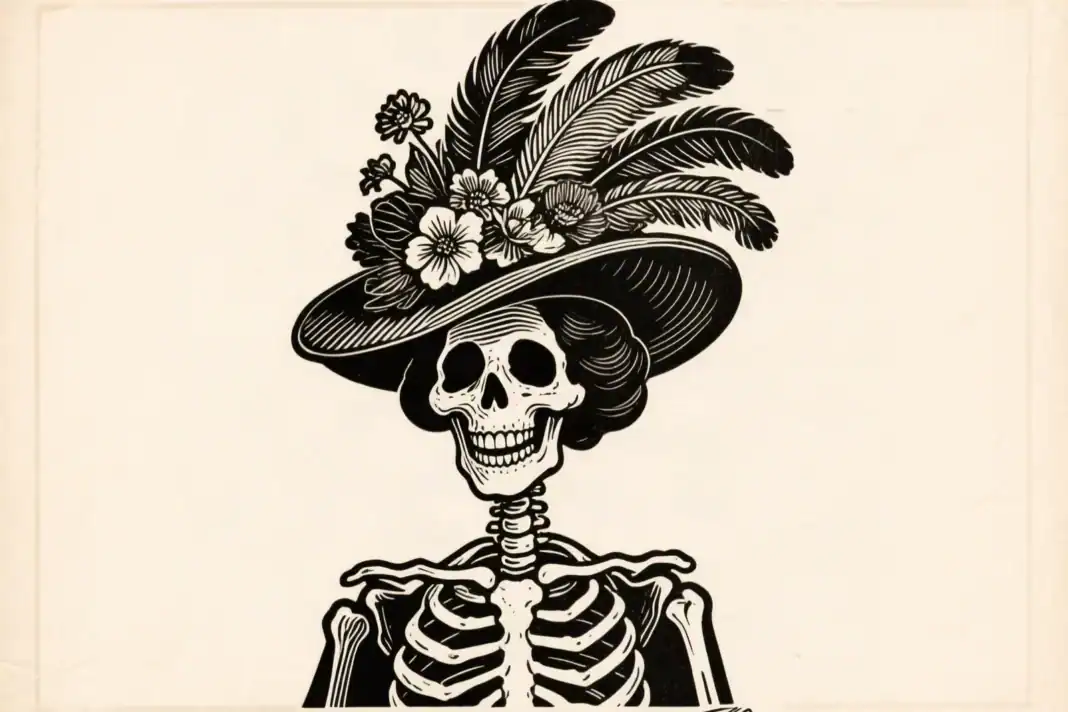
Buy it from a panadería, not a supermarket, if you can. Eat it warm or day-old, torn rather than sliced, dunked in hot chocolate. Put one on your ofrenda first, next to La Catrina if you have her, and eat yours after. If anyone at the table calls it Mexican Halloween bread, you know which article to send them.
Sources: Pan de muerto, history and regional varieties (Wikipedia, citing Brandes 2009 and Malvido 1999) · Mexico’s Secretaría de Relaciones Exteriores on the tradition · La Razón: INAH researcher on the unconfirmed origin legends · Grupo Animal: UNAM on the papalotlaxcalli and the colonial version
Frequently Asked Questions
What do the bones on pan de muerto mean?
The dough strips are bones and stand for the person who died. The ball in the center is the skull, and the round shape stands for the cycle of life and death.
Why do you put pan de muerto on the ofrenda?
To feed the souls who return on November 1 and 2. The dead are believed to take the essence of the offering, and the family eats the bread afterward.
Is pan de muerto from Spain or Mexico?
Both. Wheat bread for the dead came from Spain’s pan de ánimas, “soul bread.” The practice of feeding the returning dead is Mesoamerican. The modern loaf is Mexican.
Did pan de muerto replace a human heart?
There’s no good evidence for that. It’s a popular legend; historians and INAH researchers say the sacrifice origin story can’t be confirmed.
When do you eat pan de muerto?
Bakeries sell it from mid-October, and families eat it through November 2, often with hot chocolate or café de olla, at home or at the cemetery.
Watch on Wehpa
Ofrenda meaning, La Catrina meaning, Día de los Muertos vs Halloween. Wehpa TV is free on Roku.