
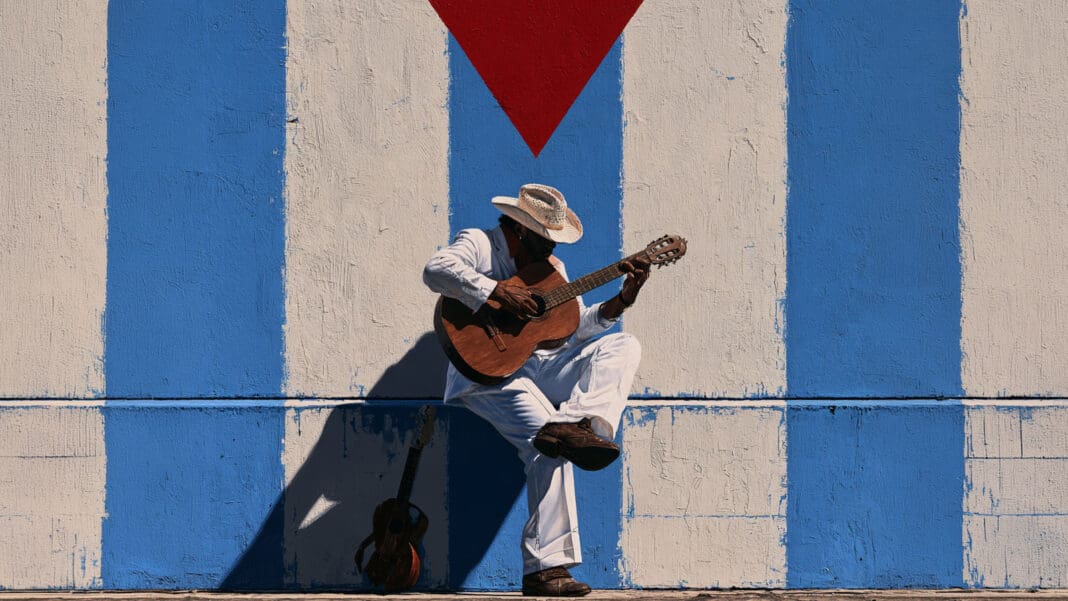
Son is the music most other Latin genres are built on — and in December 2025 UNESCO finally said so. “The practice of Cuban Son” was inscribed on the Representative List of the Intangible Cultural Heritage of Humanity, more than a century after the music left eastern Cuba.
If you have danced to salsa, you have danced to son with more brass on top.
It started in the east, not Havana
Son came out of eastern Cuba — the Oriente — in the late nineteenth century, not from the capital. Its immediate ancestor is changüí, from the Guantánamo region. The Library of Congress states it plainly: “Changüí is the predecessor of son cubano and salsa, a style of music specifically from the region of Guantanamo, Cuba. Its origins can be traced back to the 1800s, during the days of slavery in Cuba.”
That last clause matters. Son is not a folkloric curiosity that happened to travel. It was made by people held in and emerging from slavery, in the part of the island furthest from colonial power.
What UNESCO actually recognised
The 2025 inscription describes son as “a traditional music and dance practice that blends singing, instruments, rhythm and movement,” bringing together “African and European musical influences.” The tres — a Cuban string instrument descended from the Spanish guitar — “plays a key musical role,” and the singer “leads the performance, often improvising verses and guiding the dance.”
Worth noting precisely, because the coverage blurred it: UNESCO’s citation does not claim son fathered salsa, mambo or cha-cha-chá. It talks about community bonds, creativity and belonging. The lineage to salsa is well established in scholarship — the Library of Congress states it directly — but it is not what UNESCO inscribed.
The two halves of a son
A son typically moves through two sections, and the shift between them is the point. It opens composed and relatively contained, then breaks into the montuno — a repeating call-and-response between a lead singer and a chorus, over which the singer improvises.
That structure is the engine every later Cuban and Cuban-descended genre borrowed. The Spanish inheritance is in the vocal style, the lyric metre and the tres; the African inheritance is in the clave, the call-and-response and the percussion.
How it got out
Son reached Havana in the years around 1909, carried in part by soldiers moving west. Commercial recording followed, and by the 1920s the sexteto — six players — had become the standard format, with a trumpet commonly added in the 1930s. From Havana it went to New York, and from New York it came back as something else.
Frequently Asked Questions
What is son cubano?
A Cuban music and dance form combining African and European elements, built around the tres, clave rhythm and a call-and-response section called the montuno. UNESCO inscribed it in 2025.
Where did son cubano originate?
In eastern Cuba, the Oriente, in the late nineteenth century. Its direct predecessor is changüí, from the Guantánamo region, whose origins the Library of Congress traces to the 1800s during slavery.
Is son cubano the origin of salsa?
Son is widely described as the foundation salsa was built on — the Library of Congress names changüí as the predecessor of both son and salsa. UNESCO’s 2025 citation does not make that claim itself; it focuses on son’s community role.
What is a tres?
A Cuban string instrument descended from the Spanish guitar, with three courses of doubled strings. UNESCO’s inscription singles it out as playing a key musical role in son.
What is the montuno?
The second half of a son, where the composed opening gives way to a repeating call-and-response between lead singer and chorus, with the singer improvising over the top.
When did UNESCO recognise Cuban son?
In December 2025, when “The practice of Cuban Son” was inscribed on the Representative List of the Intangible Cultural Heritage of Humanity.
The son-to-salsa story only completes in New York — see how salsa was actually assembled there. For the same collision of African and European traditions on a different coast, see cumbia on Colombia’s Caribbean shore.
Sources
- “The practice of Cuban Son” UNESCO Representative List of the Intangible Cultural Heritage of Humanity, inscribed 2025.
- American Folklife Center Collections: Cuba — Library of Congress research guide.
Researched and written by Victor Ramirez. Edited and fact-checked by Mia Alejandra Umphrey. Drafting assisted by AI; all facts verified against the sources above before publication. See our editorial standards.

Part of our guide to Latin Music History.