
The short version: Agua de jamaica is hibiscus tea. The plant came from West Africa on slave ships, Mexico and the Caribbean made it a daily drink, and wellness brands are now selling it back as a $30 “hibiscus tonic.” Clinical trials suggest it modestly lowers blood pressure and total cholesterol, it’s naturally caffeine-free, and it’s a dollar a jarra. The catch: it interacts with some medications, and the sugar in a fruit-stand version cancels most of the point.
Agua de jamaica benefits are suddenly a wellness-industry talking point. Scroll TikTok long enough and someone in a matching linen set will hold up a glass of something ruby red and tell you it’s a “hibiscus tonic for cortisol and blood pressure.” The comments will ask where to buy it. The answer will be a link to a $28 bag of dried flowers.
Your abuela has a jar of the same flowers in the cabinet next to the canela. She calls it jamaica. It costs about $3 at the Mexican grocery, and it’s been on the table at every carne asada you’ve ever been to.
So let’s do what the wellness girls don’t: name where the drink actually came from, look at what the studies actually say, and be honest about the part abuela never mentioned.
This article is general information, not medical advice. If you take blood pressure medication or are pregnant, talk to your doctor before making hibiscus a daily habit.
What agua de jamaica actually is
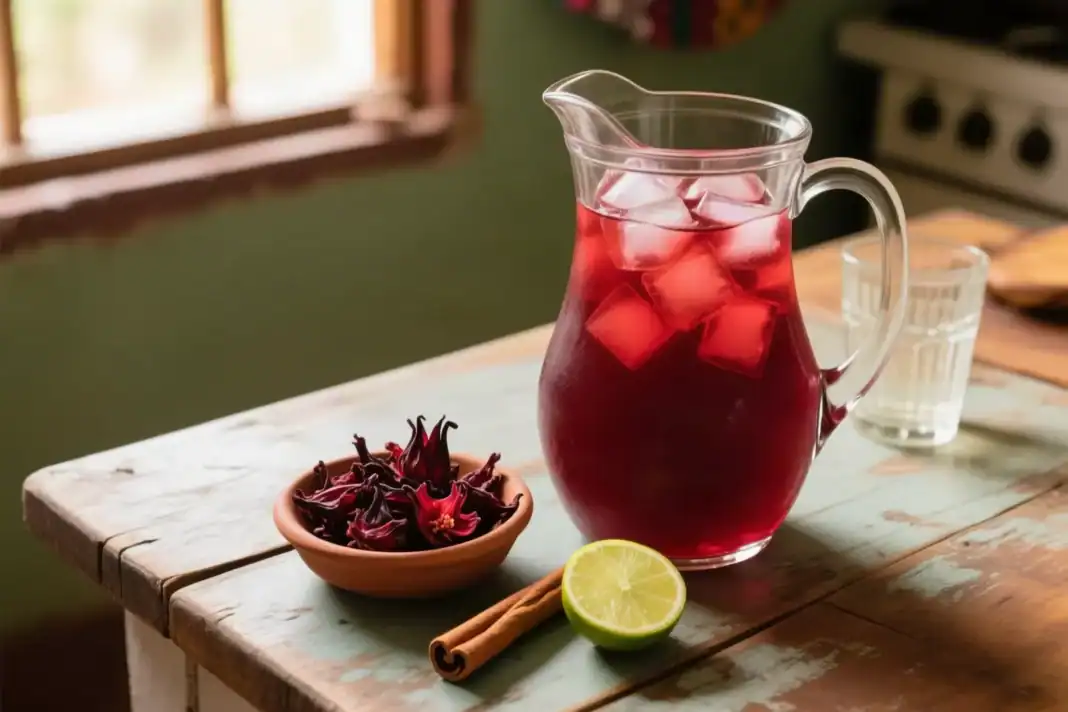
Agua de jamaica is not made from the big showy hibiscus in your tía’s front yard. It’s made from a different species, Hibiscus sabdariffa, called roselle in English. And you’re not drinking the petals. You’re drinking the calyx, the fleshy red cup that holds the flower after the petals drop. Dry those, simmer them, and the water turns the color of a wine bottle held up to the sun.
That sour, cranberry-like bite is from natural organic acids. The deep red is from anthocyanins, the same family of pigments in blueberries and red cabbage. And unlike coffee, black tea, or the energy drink in your cup holder, jamaica has zero caffeine.
Abuela was right: the African roots of jamaica
Here’s the part that never makes the TikTok.
Roselle is African. Botanists trace it to tropical West Africa and the Sudan region, where it has been grown for food, fiber and medicine for thousands of years. It reached the Americas the same way a lot of our food did: on slave ships. Enslaved Africans carried the plant and the knowledge of how to use it into the Caribbean, then Central America and Mexico, where it was folded into local cooking and never left. (For more on foods that traveled that road, see the Garífuna story.)
That’s why the same drink has a different name on every coast:
- Bissap in Senegal, sold cold in plastic bags on the street
- Karkadé in Egypt and Sudan, served hot or iced
- Zobo in Nigeria
- Sorrel in Jamaica and Trinidad, brewed with ginger, cloves and cinnamon and non-negotiable at Christmas
- Agua de jamaica in Mexico and across Central America
The Mexican name is the giveaway. The flower isn’t from Jamaica. It came through Jamaica and the Caribbean, so that’s what it got called. A drink named after its layover.
When someone sells you “hibiscus tonic,” they’re selling you bissap, karkadé, sorrel and jamaica with the lineage scrubbed off. Same playbook as the abuela rituals TikTok rebranded as $60 energy-clearing kits.
Agua de jamaica benefits the studies actually support
This is where jamaica is different from a lot of abuela remedies: it has real clinical trials behind it, not just vibes.
Blood pressure. The most cited study is a randomized, double-blind, placebo-controlled trial published in the Journal of Nutrition in 2010. Sixty-five adults with pre- or mild hypertension drank three cups of hibiscus tea a day for six weeks. The authors concluded that daily hibiscus tea “lowers BP in pre- and mildly hypertensive adults and may prove an effective component of the dietary changes recommended for people with these conditions.” Read that carefully. It says component of dietary changes, not replacement for a prescription.
Cholesterol and blood sugar. A 2022 systematic review and meta-analysis in Nutrition Reviews pooled the trials to date and found significant effects on both systolic and diastolic blood pressure, plus a total-cholesterol-lowering effect compared with other tea beverages. An earlier 2020 meta-analysis reported reductions in fasting glucose and blood pressure as well. The numbers in those papers are modest. The point isn’t that jamaica is a drug. It’s that a drink our families already make appears to nudge the exact numbers Latinos struggle with most.
Hydration without caffeine or sugar. This is the boring benefit that matters most. Unsweetened jamaica is basically flavored water with antioxidants. For a community that leads the general population in wanting “functional beverages” and reduced sugar, a pitcher of jamaica does the job of a $4 can.
The part abuela didn’t mention
Two honest caveats, because health content without them is just marketing.
It interacts with some medications. Hibiscus has a mild diuretic effect and, in pharmacology studies, has been shown to change how the body handles certain drugs, including hydrochlorothiazide (a common blood pressure pill), chloroquine, acetaminophen and simvastatin. If you’re on blood pressure medication, the thing jamaica does well is exactly why you should ask your doctor first: stacking it on top of a pill that does the same job can push you too low. The same review notes caution during pregnancy and breastfeeding because human safety data is thin.
The sugar. The jamaica at the fruit stand, the taquería and most abuelas’ kitchens is sweetened like a soda. That’s the version we grew up on, and it’s delicious, and it undoes most of the benefit above. The same trick that makes Mexican Coke taste like childhood is happening in the jarra. Cut the sugar to a spoonful, or none, and you keep the drink and lose the problem.
How to make agua de jamaica the abuela way (low sugar)
- Rinse 1 cup dried flor de jamaica (the dried-chile aisle at any Mexican grocery).
- Simmer in 4 cups water for 10 minutes. Turn it off and let it steep 10 more.
- Strain into a jarra and add 4 more cups cold water.
- Sweeten to taste, and taste before you sweeten. A tablespoon of piloncillo or honey is plenty. Cinnamon stick and a squeeze of lime are optional and very abuela.
- Serve over ice. It stains everything, so use the old towel.
Don’t throw the flowers out. The soft rehydrated calyces are edible. In Mexico they get sautéed with onion and chile for tacos de jamaica, one of the oldest vegetarian tacos there is.
Why this matters right now
Latino consumers are outpacing the general population on nearly every wellness goal this year, from protein to gut health to functional drinks. The industry noticed, and its response has been to sell our own pantry back to us with a new label and a markup.
Jamaica is the case study. The plant is African, the drink is ours, the science is real, and the price is three dollars. Abuela was right. She just didn’t call it a tonic.
Frequently Asked Questions
Is agua de jamaica the same as hibiscus tea?
Yes. Agua de jamaica is the Mexican and Central American name for a drink made from the dried calyces of Hibiscus sabdariffa (roselle). In Jamaica and Trinidad it’s called sorrel, in Senegal bissap, in Egypt karkadé.
Does agua de jamaica lower blood pressure?
Clinical trials suggest it can modestly lower blood pressure in people with mild or pre-hypertension when consumed daily. Researchers describe it as a possible part of dietary changes, not a replacement for medication. Ask your doctor if you take blood pressure pills, because the two can stack.
Does agua de jamaica have caffeine?
No. Hibiscus is naturally caffeine-free, which makes it a common evening or kids’ drink.
Is agua de jamaica safe during pregnancy?
Researchers recommend caution during pregnancy and breastfeeding because human safety studies are limited. Talk to your doctor.
Where did agua de jamaica come from?
The roselle plant originated in West Africa and arrived in the Caribbean and Mexico through the transatlantic slave trade. The Mexican name “jamaica” reflects the Caribbean route it traveled, not the plant’s origin.
Watch on Wehpa
For more of the foods and remedies our families kept alive, see the Indigenous foods of the Americas and what a paletero actually sells. Wehpa TV is free on Roku.