
The quinceañera gown started as a modest white or pastel dress and became one of the most elaborate garments a young woman will ever wear. Almost every part of it carries meaning — the colour, the shoes, the doll she hands over.
The celebration itself marks a Latina’s fifteenth birthday and her passage into womanhood. Where it came from is a longer argument than most write-ups admit.
Where the tradition comes from
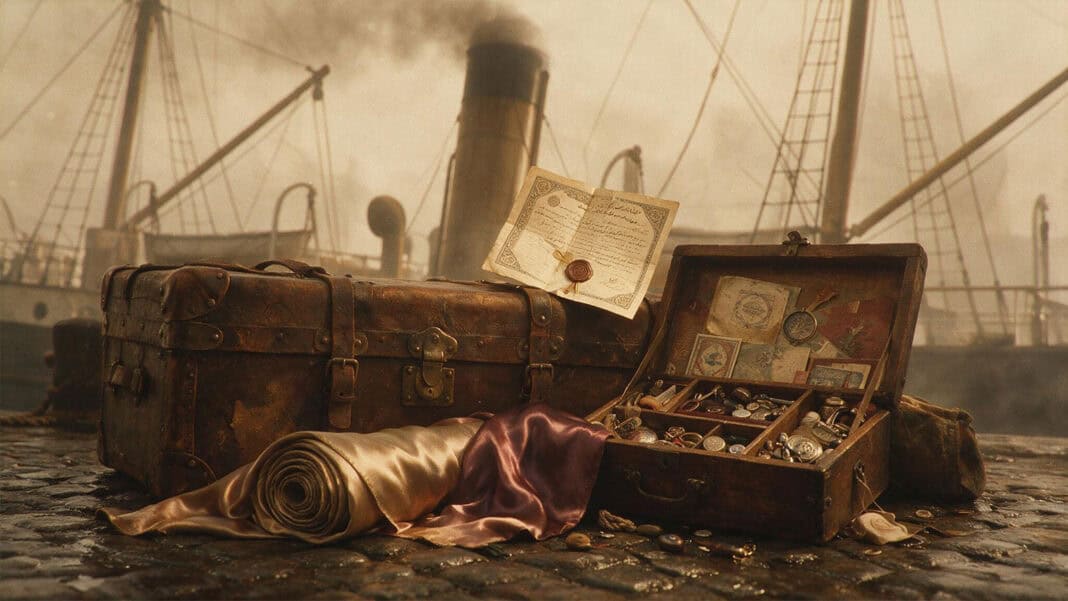
The common account traces the quinceañera to Indigenous Mesoamerican coming-of-age rites, reshaped after the 1500s to fit Roman Catholic practice and European court dress. History puts it this way: the roots “stretch back centuries to the Indigenous civilizations of Mesoamerica,” among Maya and Aztec peoples, and Spanish colonisers “reshaped these Indigenous rites to fit Roman Catholic beliefs and mirror European court traditions.”
That is the account you will hear most often, and it is worth holding it loosely. Pre-Columbian ceremonial life is thinly documented, and reference works tend to hedge — the quinceañera is thought to have emerged from that blending rather than proven to descend from a specific rite. What is not in doubt is that the modern celebration is a genuine fusion, and that its Catholic and court-dress elements are the easiest to trace.
How the dress changed
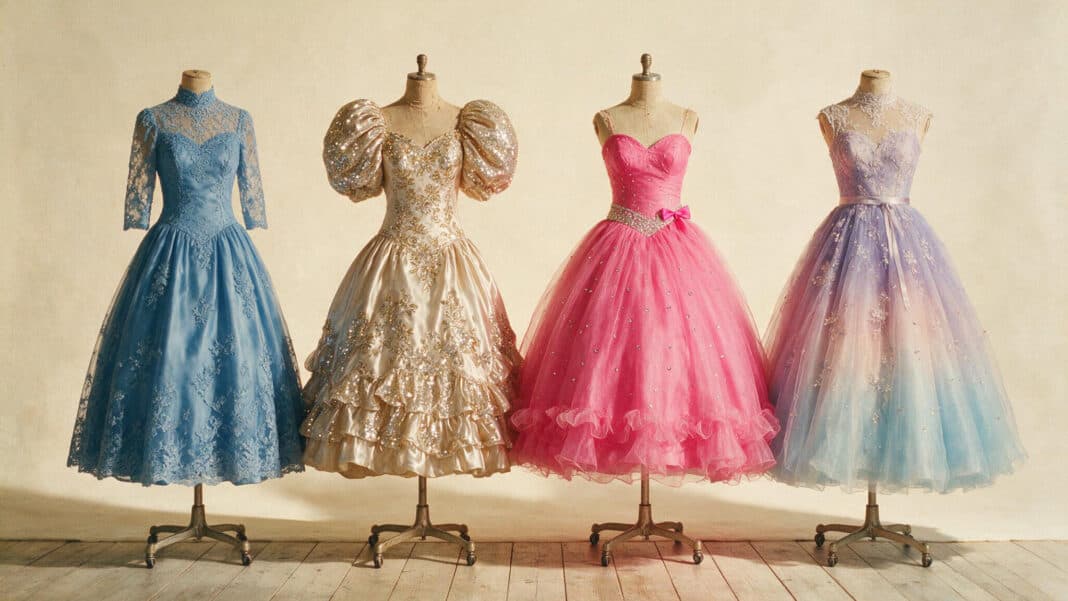
The broad arc is easy enough to see in family photographs across four generations.
- Mid-century: white or soft pastel, high necklines, lace, full but not extravagant skirts. The dress echoed a debutante gown, and the message was presentation to the community.
- The 1980s: puffed sleeves, layers of tulle, sequins, and the tiara. The silhouette ballooned. This is the era that fixed the “princess for a day” image still attached to the celebration.
- The 2000s: colour arrived. Hot pink, turquoise, red, and full themes built around them — with the damas coordinated to match. The dress became a statement of personality rather than only of tradition.
- Now: anything, including a return to roots. Charro quinces draw on Mexican charrería dress and folkloric embroidery; others go couture, ombré, or change dress two or three times in a night.
The folklorist Norma E. Cantú, quoted in the same piece, notes that for all the variation the dominant theme is a familiar one: “The most common theme, not surprisingly, is Cinderella.”
The rituals that survive every trend
However the dress changes, three elements persist, and they are the part that carries the meaning:
- The shoe change — a parent swaps her flats for her first heels. The step into adulthood, made literal.
- The last doll (última muñeca) — she is given a doll, often dressed to match her gown, as a farewell to childhood.
- The court — damas and chambelanes, the community standing with her rather than watching her.
Cantú describes what the celebration does in social terms: “I see the community establishing that social glue.” The gown is the costume; the rituals are the point.
Frequently Asked Questions
What is a quinceañera dress?
The formal gown worn at a Latina’s fifteenth-birthday celebration. Its colour, style and the rituals performed around it all carry symbolic meaning.
Why were quinceañera dresses traditionally white?
White and pastel echoed debutante and Catholic presentation customs, signalling purity and formal introduction to the community. Bold colours became common from the 2000s.
What are the origins of the quinceañera?
It is commonly traced to Indigenous Mesoamerican coming-of-age rites reshaped by Spanish Catholic practice and European court dress after the 1500s. Reference works hedge on the pre-Columbian link, since that period is thinly documented.
What is a charro quinceañera?
A quinceañera themed around Mexican charrería — horsemanship culture — with gowns drawing on charro and folkloric dress and traditional embroidery.
What is the “last doll” in a quinceañera?
The última muñeca: a doll, often made to match the gown, given to the girl as the final symbol of her childhood.
What is the shoe-changing ceremony?
A parent replaces the girl’s flat shoes with her first heels during the celebration, marking her step into womanhood.
The quinceañera gown belongs to the same story as the zoot suit and the guayabera — clothing that stopped being only clothing and started carrying an argument about who gets to be seen.
Sources
- “How the Quinceañera Became a Latin American Rite of Passage” History — including comments from folklorist Norma E. Cantú, Trinity University.
Researched and written by Victor Ramirez. Edited and fact-checked by Mia Alejandra Umphrey. Drafting assisted by AI; the pre-Columbian origins of the quinceañera are attributed rather than asserted, because that period is thinly documented and reference works hedge on the link. See our editorial standards.
Part of our guide to Latino Style History.