
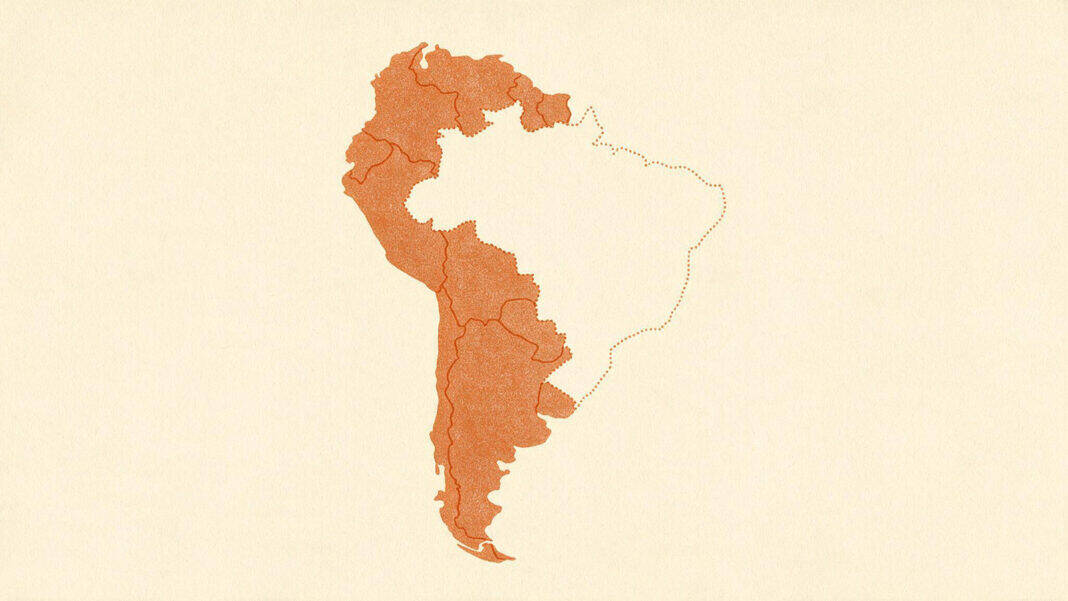
Brazil is unambiguously part of Latin America, and by the common definition Brazilians are Latino — but the United States government does not count them that way. The federal definition of “Hispanic or Latino” covers people of Spanish culture or origin. Brazil’s language and history run to Portugal, so Brazilians are officially excluded.
Which means the honest answer to “is Brazil Latino?” is: it depends who is asking, and Brazilians mostly disagree with the paperwork.
The geography is not in dispute
Latin America is defined by the Romance languages that colonisation left behind — Spanish, Portuguese and French. Brazil is the largest country in South America, the most populous country in Latin America, and speaks Portuguese. On every geographic and organisational definition, it is in.
The confusion is not really about Brazil. It is about the fact that English has two words doing different jobs, which is the same tangle covered in Hispanic vs Latino vs Latinx vs Latine. Hispanic is a language category: Spanish-speaking origin. Latino is a geographic one: Latin American origin. Brazil fails the first test and passes the second.
What the US government actually says
Federal statistics follow a standard last revised in 1997, which defines Hispanic or Latino as a person of Cuban, Mexican, Puerto Rican, South or Central American, or other Spanish culture or origin. That final clause is the one that matters. Because Brazil’s culture and history link principally to Portugal rather than Spain, Brazilians are not counted as Hispanic or Latino in official data.
So a Brazilian in the United States can be Latin American, be treated as Latino socially, and still be recorded as “not Hispanic or Latino” on a census form.
The accident that showed what Brazilians actually think
In 2020 the Census Bureau made a processing mistake. During the American Community Survey edit, Brazilians were left out of the back-coding step that normally reclassifies them as non-Hispanic. For one year, their own answers survived intact.
The result, documented by Pew Research Center: at least 416,000 Brazilians — roughly 70% of those surveyed — described themselves as Hispanic or Latino. In 2019 the recorded figure was 14,000. In 2021, after the error was fixed, 16,000.
Had those answers been kept, Brazilians would have ranked as the 14th-largest Latino origin group in the country, ahead of Nicaragua. A clerical error is the only reason anyone knows.
Why Brazilians themselves are split
Not every Brazilian wants the label, and the reluctance is not simple. Some see “Latino” in the United States as a category built around Spanish-speaking experience that does not describe theirs. Others reject being folded into a US racial framework at all, having come from a country with its own long and specific conversation about race. As scholars writing in The Conversation have argued, the disagreement says more about how the United States sorts people than about Brazil.
So what is the answer
Geographically: yes. Culturally: usually yes, and most Brazilians in the US say so themselves. Officially: no, by a definition written in 1997 that turns on Spain.
It is worth knowing which of those three you are being asked about, because they give different answers and all three are in use at once.
Frequently Asked Questions
Is Brazil part of Latin America?
Yes. Latin America is defined by the Romance languages left by colonisation — Spanish, Portuguese and French. Brazil is the largest and most populous country in Latin America.
Are Brazilians Latino?
By the geographic definition, yes — Latino means Latin American origin. But the US federal government does not count Brazilians as Hispanic or Latino, because its definition covers people of Spanish culture or origin.
Are Brazilians Hispanic?
No. Hispanic refers to Spanish-speaking origin. Brazil’s language is Portuguese, so Brazilians are not Hispanic under any common definition.
Do Brazilians in the US call themselves Latino?
Mostly yes. A 2020 census coding error left Brazilians’ own answers uncorrected, and roughly 70% — at least 416,000 people — identified as Hispanic or Latino. Official counts in surrounding years were under 20,000.
Why is Brazil excluded from US Hispanic statistics?
Because the federal standard, last revised in 1997, defines Hispanic or Latino as people of Spanish culture or origin. Brazil’s culture and history link principally to Portugal.
Brazil is not the only place where the labels fit badly. The same problem shapes the argument over Hispanic, Latino, Latinx and Latine, and it runs through Afro-Latino identity and Garífuna history — communities that are routinely counted into or out of categories they did not write.
Sources
- “How a coding error provided a rare glimpse into Latino identity among Brazilians in the U.S.” Pew Research Center, April 2023.
- “About the Hispanic Population and its Origin” United States Census Bureau.
- “Are Brazilians Latinos? What their identity struggle tells us about race in America” The Conversation.
Researched and written by Victor Ramirez. Edited and fact-checked by Mia Alejandra Umphrey. Drafting assisted by AI; all facts verified against the sources above before publication. See our editorial standards.

Part of our guide to Latino Identity Explained.