
Peru has the strongest claim, and UNESCO agrees — but not in the way most headlines suggested. In 2023 UNESCO inscribed ceviche on its Representative List of the Intangible Cultural Heritage of Humanity. What it recognised was Peruvian practice, not Peruvian invention.
The official title is precise: “Practices and meanings associated with the preparation and consumption of ceviche, an expression of Peruvian traditional cuisine.” Nowhere does it say Peru invented the dish.
What UNESCO actually inscribed
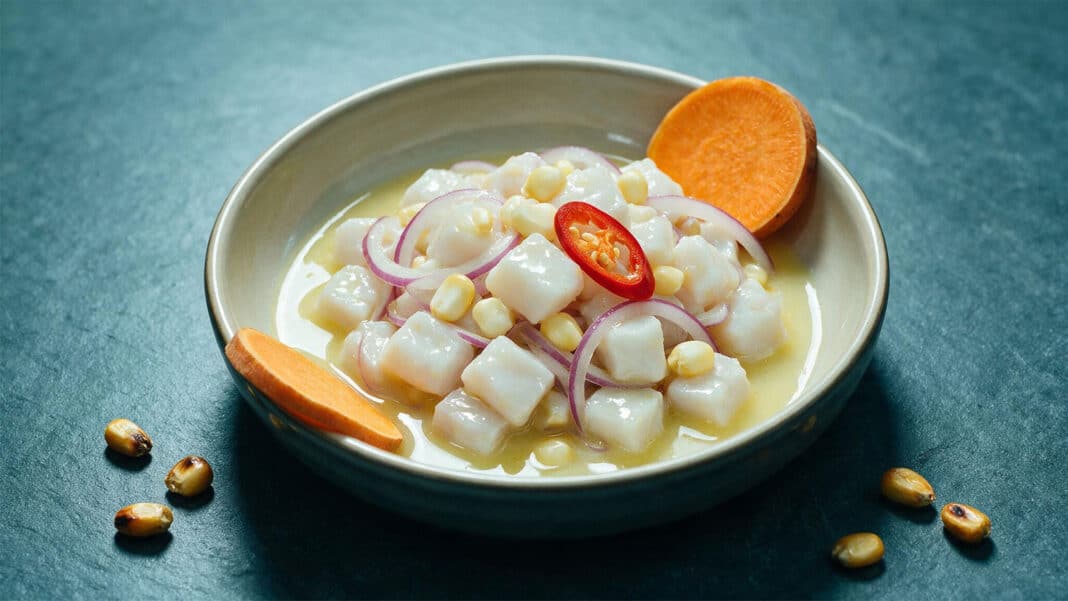
The 2023 listing describes ceviche as a traditional dish in Peru — raw fish marinated in lemon, seasoned with chilli and salt, served with locally grown produce — and focuses on what it means: family transmission, regional variation, and its place in celebration and ritual, especially the festivity of Saint Peter, patron saint of artisanal fishers.
It was Peru’s twelfth inscription and its first for culinary culture. The distinction matters: UNESCO recognises living practice, not ownership. It is a heritage list, not a patent office.
The dish is around two thousand years old
Ceviche’s roots run to pre-Columbian coastal Peru. The Moche, a civilisation that flourished in what is now northern Peru, are often named as among the first people to eat raw fish cured in acid — and National Geographic reports that the practice likely predates even them by roughly three thousand years.
But the ceviche of that period was not the ceviche on the plate today, for one straightforward reason.
There were no limes
Citrus is not native to the Americas. Onions and citrus — first bitter oranges, then lemons and limes — arrived only after 1492. Whatever pre-Columbian coastal peoples were making, they were not marinating fish in lime juice.
So what did they use? The food historian Maricel Presilla suggests seaweed and chilli peppers probably did the job before limes came ashore. She experimented with tumbo, a relative of passion fruit, and found it impractical; the acidic chillies worked better.
This is the same trap that catches a lot of food writing about the Americas — treating ingredients introduced by colonisation as ancient. We flagged it in our piece on the crops the Americas actually gave the world.
The modern version is barely sixty years old
The biggest surprise in ceviche’s history is how recent the familiar version is. For most of its life, ceviche was marinated for hours — the fish effectively cooked through by acid.
The Peruvian chef Mitsuharu Tsumura has described how ceviche only became popular in Lima about sixty years ago, and how Japanese immigrants transformed it. Coming from a sashimi tradition, they understood raw fish, cut the marination to minutes, and served it straight away — so you could see the fish was raw.
That is Nikkei cuisine: the Japanese-Peruvian tradition that reshaped Peru’s national dish. The pattern is exactly the one behind tacos al pastor, where Lebanese immigrants gave Mexico one of its most recognisable foods.
So where does Ecuador fit
Ecuador has its own established ceviche tradition, and it is a different dish: shrimp is common, the seafood is often cooked before it is marinated, and tomato — and sometimes peanuts — appear where a Peruvian version would not have them.
Neither country is doing a worse version of the other. As with arepas across the Venezuela–Colombia border, the argument assumes a single original that a modern border can be drawn around. The coast came first.
Frequently Asked Questions
Is ceviche Peruvian or Ecuadorian?
Both countries have long-standing ceviche traditions and they are genuinely different dishes. Peru has the deepest documented history and UNESCO recognition, but the practice predates both modern states.
Did UNESCO say Peru invented ceviche?
No. UNESCO inscribed “practices and meanings associated with the preparation and consumption of ceviche, an expression of Peruvian traditional cuisine” in 2023. It recognises living Peruvian practice, not invention or ownership.
How old is ceviche?
Its roots on the Peruvian coast go back around two thousand years, to the Moche and likely earlier. The version made with lime is much younger, because citrus only reached the Americas after 1492.
What was ceviche marinated in before limes?
Before citrus arrived, coastal peoples are thought to have used chilli peppers and seaweed, and possibly tumbo, a relative of passion fruit. Food historian Maricel Presilla found the chillies far more effective than tumbo.
What is Nikkei ceviche?
Nikkei is the Japanese-Peruvian culinary tradition. Japanese immigrants in Lima shortened ceviche’s marination from hours to minutes and served the fish visibly raw — the style most people now think of as classic Peruvian ceviche.
What is the difference between Peruvian and Ecuadorian ceviche?
Peruvian ceviche is typically raw fish marinated briefly in lime with chilli. Ecuadorian ceviche often uses shrimp, may cook the seafood before marinating, and commonly includes tomato and sometimes peanuts.
Ceviche belongs to a pattern that runs through this site: national dishes that were made by outsiders, borders drawn after the recipe, and ingredients everyone assumes are ancient. See tacos al pastor, the tamale, and the pupusa.
Sources
- “Practices and meanings associated with the preparation and consumption of ceviche, an expression of Peruvian traditional cuisine” UNESCO Representative List of the Intangible Cultural Heritage of Humanity, inscribed 2023.
- “Ceviche: the surprising history behind Peru’s raw fish dish” National Geographic — including remarks from food historian Maricel Presilla and chef Mitsuharu Tsumura.
Researched and written by Victor Ramirez. Edited and fact-checked by Mia Alejandra Umphrey. Drafting assisted by AI; all facts verified against the sources above before publication. See our editorial standards.

Part of our guide to Latin Food Origins.