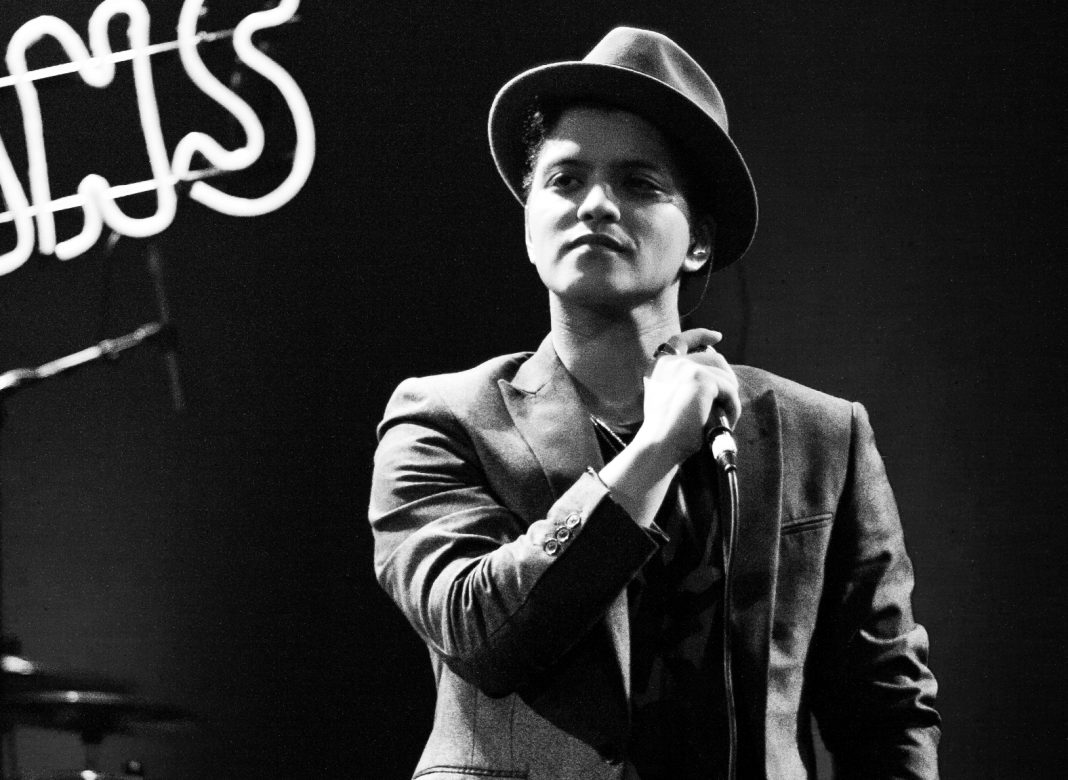
Bruno Mars doesn’t sound like one genre because he was never raised on one. The man behind “Uptown Funk,” “24K Magic,” “Locked Out of Heaven,” and the throwback Silk Sonic project pulls from doo-wop, reggae, funk, R&B, soul, Motown, and Latin percussion — and he doesn’t just borrow them. He grew up inside them.
Bruno Mars — born Peter Gene Hernandez — is half Puerto Rican on his father’s side and half Filipino on his mother’s, raised in Honolulu, Hawaii. That mixed, music-saturated upbringing is the reason his catalog moves so easily between funk, soul, reggae, doo-wop, and Latin percussion.
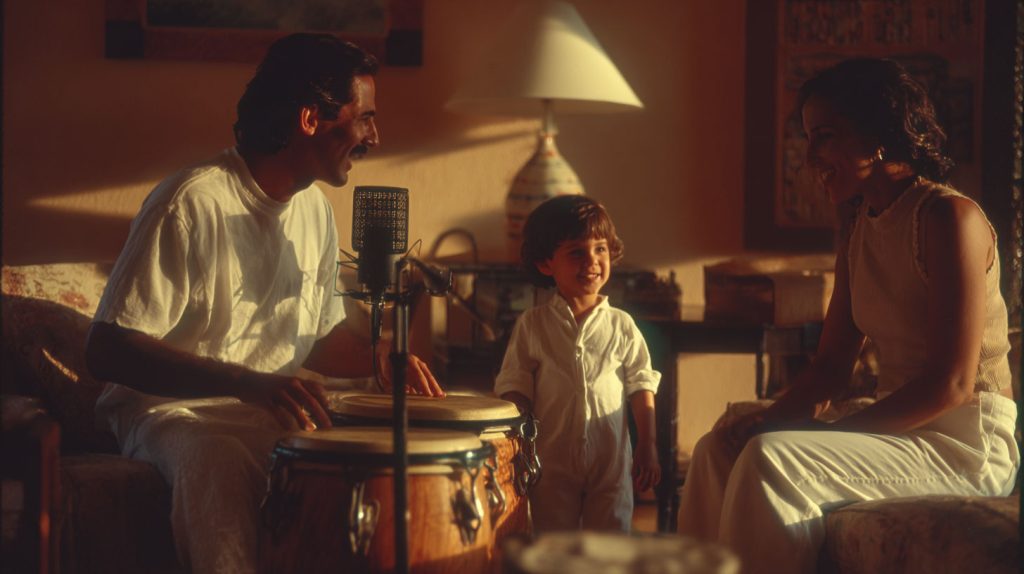
Born Peter Gene Hernandez on October 8, 1985, in Honolulu, Bruno is the son of Peter Hernandez Sr., a Puerto Rican percussionist from Brooklyn, and Bernadette San Pedro Bayot, a Filipino immigrant who came to Hawaii as a child. His father played Latin music and rock and roll. His mother sang and danced hula. Together they ran a family band called The Love Notes that performed across Waikiki — and Bruno was on stage by the time he could walk.
The Elvis years (yes, really)
By age four, Bruno was a working Elvis impersonator. Tourists in Honolulu came to see the tiny kid in a white jumpsuit who could already sell a song. He even appeared in the 1992 film Honeymoon in Vegas and was profiled in MidWeek magazine, where his father reportedly called him “Bruno” — a nickname borrowed from the wrestler Bruno Sammartino because of how chubby and tough the toddler looked. The Mars came later, when he wanted a stage name that sounded like it could float anywhere.
This wasn’t novelty. It was an apprenticeship. Bruno learned how to read a crowd, hold a stage, and shape a voice years before most artists ever pick up a microphone.
What the Puerto Rican side gave him
Listen to “Locked Out of Heaven” and you hear The Police — but listen closer and you hear the conga, the timbales, the offbeat hand percussion that any kid raised around Puerto Rican musicians knows in their bones. His father’s repertoire of Latin standards, doo-wop, and rock and roll became the foundation Bruno would later layer modern pop and funk on top of.
Silk Sonic, his 2021 collaboration with Anderson .Paak, is essentially Bruno paying full tribute to the music his father played in living rooms and Waikiki clubs in the 80s. The fades, the harmonies, the wink — that’s a Puerto Rican lounge band rebuilt for Spotify.
What the Filipino side gave him
His mother’s family brought hula, kundiman, and the tight family-band tradition that runs through Filipino-American music culture, where everyone sings, everyone harmonizes, and the show is communal. Bruno’s older sister Tiara performs as part of a sister group called The Lylas. His brother Eric played drums in his early touring band. The Hernandez household ran like a workshop — everyone contributing parts, nobody siloed in a genre.
This is also why his vocal style sits in such a specific pocket: light, agile, unafraid of falsetto, never pushing past what the song needs. That restraint comes from singing harmonies before learning to be a frontman.
Why Hawaii matters as much as either heritage
Honolulu in the 80s and 90s was a crossroads. Reggae was the unofficial soundtrack — Hawaiian artists like Israel Kamakawiwo’ole had reshaped reggae into something local and slow. Bruno absorbed it. You can hear that island reggae lift in “The Lazy Song” and woven through Doo-Wops & Hooligans. Hawaii is also where Black, Latino, Filipino, Native Hawaiian, and Japanese musical traditions sit side by side without the U.S. mainland’s rigid genre walls. Bruno grew up in that mix as a default, not a novelty.
The recent work confirms the theory
In 2024, his single “APT” with Rosé of BLACKPINK exploded globally — a track that fuses K-pop, American pop-rock, and a chant structure rooted in Korean and Filipino party games. Bruno did what he always does: heard a tradition, found the pop hook inside it, and brought it home. He’s been doing it since he was four years old in a sequined jumpsuit.
So why doesn’t Hollywood market him as Latino or Asian?
This is the question worth asking. Bruno Mars is one of the biggest pop stars on Earth — and yet he’s rarely included in conversations about Latino or Asian American representation. Part of it is his own choice to let the music speak. Part of it is the industry’s long habit of erasing mixed-heritage artists into a vague “universal” category that conveniently strips them of context.
But the context is the whole point. Without the Puerto Rican father, no Silk Sonic. Without the Filipino mother, no harmonies. Without Hawaii, no reggae lift. Bruno Mars isn’t a man without a story. He’s a man whose entire catalog is the story — if you know how to listen.
Frequently Asked Questions
Is Bruno Mars Puerto Rican?
Yes. Bruno Mars is half Puerto Rican through his father, Peter Hernandez Sr., a percussionist from Brooklyn. His father’s Latin music and doo-wop repertoire shaped the rhythmic foundation heard across Bruno’s catalog, most openly in the 2021 Silk Sonic project with Anderson .Paak.
Is Bruno Mars Filipino?
Yes. Bruno Mars is half Filipino through his mother, Bernadette San Pedro Bayot, who immigrated to Hawaii from the Philippines as a child. Her family’s singing and tight-harmony tradition shaped Bruno’s agile vocal style and the communal feel of his early family band.
What is Bruno Mars’s real name?
Bruno Mars’s real name is Peter Gene Hernandez. He was born October 8, 1985, in Honolulu, Hawaii. The nickname “Bruno” came from his father in childhood, after wrestler Bruno Sammartino; he added “Mars” later as a stage name that “sounded like it could float anywhere.”
Where did Bruno Mars grow up?
Bruno Mars grew up in Honolulu, Hawaii, performing from age four in his family’s band, The Love Notes. Hawaii’s blend of Black, Latino, Filipino, and Native Hawaiian music — especially island reggae — shaped his sound years before he moved to Los Angeles.
Is Bruno Mars Latino?
Yes, Bruno Mars is Latino through his Puerto Rican father, though the industry rarely markets him that way. Mixed-heritage artists are often folded into a vague “universal” pop category that strips their context — even though that Puerto Rican and Filipino heritage is central to his sound.
Watch on Wehpa
For more BIPOC artists whose roots shaped the sound of modern pop, head to Wehpa TV — free on Roku.